by lynncarnes@gmail.com | May 29, 2026 | Strength
There’s a particular kind of helplessness that comes with watching a parent slow down.
You see things they might not. The fridge that’s less full than it used to be. The way they push themselves up from a chair now. The walk that’s gotten shorter, or stopped.
You want to do something. But every time you try, you either get “I’m fine” or a conversation that ends in hurt feelings. The gap between caring and helping can feel very wide.
This article is about that gap, and how to work in it.
What your parent is protecting
Before thinking about tactics, it’s worth understanding what physical independence means to most older adults.
It’s not just the ability to do things. It’s the sense of self that comes with it. Many people have spent their whole lives being competent, capable, and in charge of their own bodies. Slowing down is a loss. Accepting help with it is a more complicated loss.
When you express concern about a parent’s physical health, what they often hear, even when it isn’t what you mean, is: you’re not doing well. You’re declining. You need me to manage this for you.
The support that works tends to be the support that reinforces their agency rather than substituting for it.
What actually helps
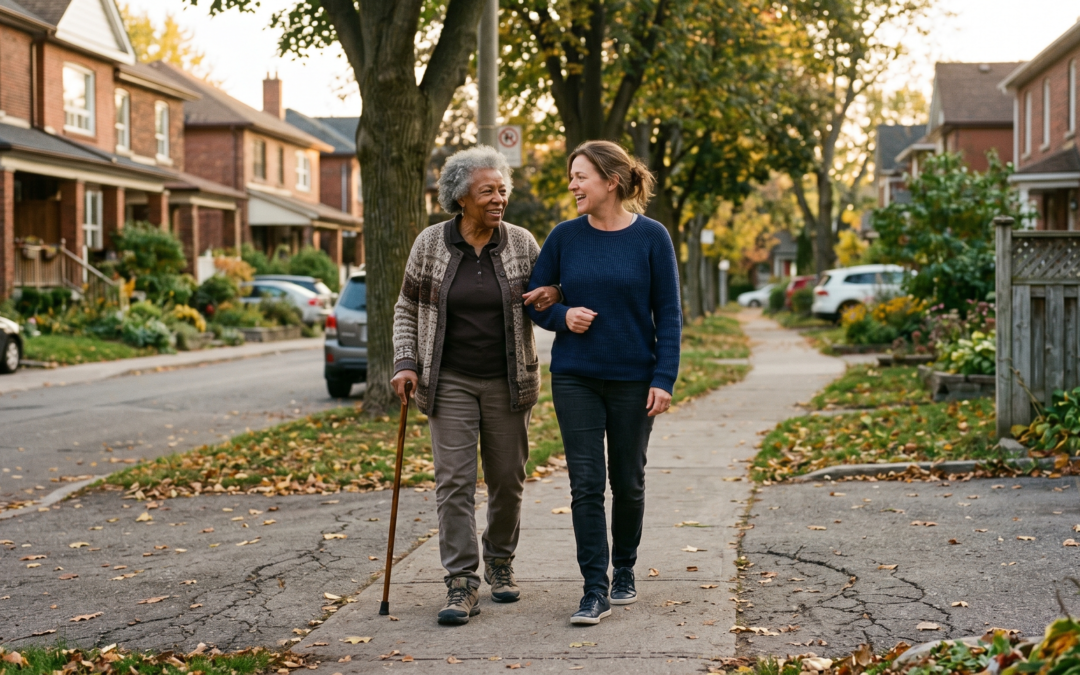
Doing alongside, not doing for. There’s a meaningful difference between “I’ll take you to the gym” and “I’ve been wanting to find a place to walk regularly. Would you want to join me?” The first positions you as the solution to their problem. The second positions you as someone doing the same thing they might want to do.
This is not a manipulation tactic. It’s an honest framing that creates a collaborative dynamic rather than a prescriptive one.
Finding something they actually enjoy. Not all movement is the same. A parent who spent their career on their feet may find structured exercise boring. A former dancer might respond to something rhythmic. A nature person wants to be outside. Exercise that fits a person’s history and preferences has a much better chance of continuing than exercise that feels like medicine.
Ask what they used to enjoy. “Were you ever active in a particular way? Is there anything like that you’d want to try again?” is a better starting place than “you should really be doing something for your strength.”
Connecting it to something they care about. Strength and mobility are means to ends. If your parent loves their garden, the argument for physical activity is “this helps you keep doing the garden.” If they want to be at a grandchild’s events, “staying strong keeps you mobile enough to be there” is the conversation.
Abstract health arguments rarely move people. Concrete life arguments often do.
Removing friction, not adding pressure. If getting to a class is a logistics problem, solving the logistics without attaching it to a conversation about their health is a genuine gift. “I’m going past the Y anyway, want me to bring you?” is different from “you really should be going to the Y.”
The harder cases
Some parents are resistant in ways that go beyond the normal reluctance. They minimize clear problems. They refuse to see doctors. They dismiss concerns with a firmness that shuts the conversation down entirely.
A few things that still apply:
You cannot make another adult take care of themselves. This is a real limit, and accepting it is part of being in this role.
You can keep the door open without forcing it. “I know you don’t want to talk about this, but I want you to know I’m here when you do” is worth saying and worth meaning.
A doctor’s recommendation carries different weight than a family member’s. If you can get a conversation happening with their physician, that changes the dynamic in ways that a conversation from you often can’t.
And in some cases, waiting for a moment of natural motivation, after a friend has a fall, after a TV segment catches their attention, is more effective than sustained pressure. The moment of receptivity matters.
The balance
The goal here is not to become your parent’s health manager. It’s to stay in genuine relationship with them while making it easy for them to stay healthy if they want to.
The distinction matters. One of those is a role that erodes the relationship over time. The other is just being a thoughtful family member.
If you’ve been finding the physical health conversations difficult, the same principles that work for broader aging conversations apply here. Lead with curiosity. Ask before you advise. Be alongside, not in front.
If this resonated and you think someone you know could use it, share it their way.
Take the 3-Minute Assessment
The people who stay most active tend to have people around them who make it easy and enjoyable. You can be that person.
Anne
by lynncarnes@gmail.com | May 29, 2026 | At-Home
When my husband came home from the hospital, we started talking about what changes to make to our house. Not because we planned to sell it. Because we planned to stay in it.
What I didn’t expect was learning, in the middle of that process, that several of the things we were doing for safety were also things that would make the house more appealing on the market if we ever did decide to sell.
That surprised me. I’d assumed safety features were a compromise, something you do because you need to, that a potential buyer would see as a sign of the previous occupant’s limitations rather than as something to want.
The reality is more interesting than that.
What universal design actually means
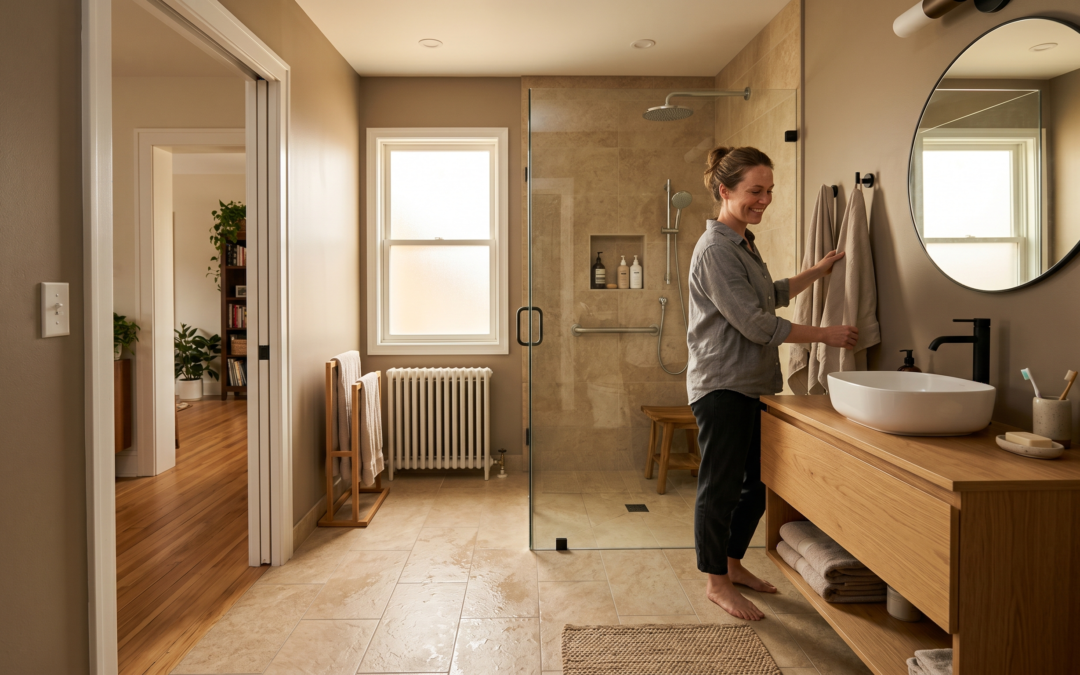
The term is “universal design,” and it refers to home features designed to work well for people across a wide range of ages, abilities, and body types. Curbless showers. Wide doorways. Lever-style door handles. Single-floor living options. Rocker switches instead of toggle switches.
These features are not exclusively for older adults. They’re useful for anyone carrying groceries, anyone with temporary injuries, anyone moving furniture, any family with young children. The demographic shift has made them increasingly sought after, but the appeal was always broader than just the aging-in-place market.
What the real estate community says
The research here is directional rather than definitive. Home values are hyperlocal and depend on too many factors for broad numbers to mean much. But the consistent observation from real estate professionals who work with aging-in-place modifications is this: homes with good universal design features in key areas, particularly bathrooms and kitchens, sell more easily and at stronger prices than comparable homes without them.
The buyer pool has expanded. Multigenerational households are more common. Aging baby boomers are one of the largest buyer segments in many markets. Features that serve those buyers well are not liabilities.
For your specific market, talking to a local real estate professional who has experience with universal design or senior housing is the right move before making major decisions. This is general observation, not financial advice.
The modifications that do double duty
Curbless (zero-threshold) showers. A shower without a step to climb over is safer, easier to clean, and widely considered a design upgrade. Contractors and designers increasingly recommend them regardless of client age. They’re common in high-end homes.
Wider doorways. The standard in many older homes is 28 to 30 inches. Widening to 36 inches accommodates wheelchairs but also furniture moving, large dogs, anyone with a walker or crutches, and just generally creates a more open feeling. In new construction, this is increasingly standard.
Grab bars in the bathroom. I wrote separately about how modern grab bars look nothing like the institutional chrome bars of thirty years ago. High-quality grab bars in matching finishes look like intentional design. They are increasingly listed as features, not red flags.
First-floor bedroom or bedroom flex space. This one is high-value for aging in place and for sale. A dedicated first-floor bedroom, or a room that could serve as one, is highly sought after by buyers who are thinking ahead.
Lever handles. Replacing doorknobs with lever handles is inexpensive, takes an afternoon, and is better for nearly everyone, arthritic or not. The ease of use is a small quality-of-life improvement that costs almost nothing.
Rocker light switches. Standard toggle switches require more precise movement. Rocker switches are easier to use in the dark, with full hands, or with reduced grip strength. Again, inexpensive and broadly useful.
The ones that don’t add value
Not every modification works this way. Stair lifts, for example, are very useful for the people who need them and are almost always viewed as a liability by buyers who don’t. They can typically be removed if you sell, but they tend to signal a specific use case rather than a broadly desirable feature.
The same is true for some bathroom safety equipment when installed without attention to design. A cheaply installed grab bar that doesn’t match the fixtures signals “safety modification” in a way that a well-chosen bar in the right finish does not.
The principle is consistency. Modifications done well, with attention to design and finish quality, tend to read as upgrades. Modifications done hastily or purely for function tend to read as accommodations.
The main point
If you’re making modifications to age in place, make them well. That’s the whole argument.
Done well, many of these changes serve your daily life right now, protect your safety, and position your home as a more desirable property if your plans ever change.
If you want to think through what changes make sense for your home and your situation, the room-by-room home safety audit is a good place to start.
Take the 3-Minute Assessment
Your home can work harder for you. In more ways than you might expect.
Anne
by lynncarnes@gmail.com | May 29, 2026 | Preparedness
If you’re reading this, you’re probably the person in your family who finally decided someone has to say something.
Maybe you’ve noticed things. A parent driving when they probably shouldn’t. A house that’s harder to keep up than it used to be. A silence on the other end of the phone when you ask how things are going that lasts a beat too long.
You want to have a conversation. You’re not sure how to start it without making things worse.
That feeling is exactly right, and it’s worth paying attention to. Because the way you open this conversation will determine whether a door opens or a wall goes up.
Why this is harder than it should be
Talking to a parent about the future is complicated by a specific dynamic that doesn’t exist in most conversations. You are asking someone who has been the authority figure in your relationship to let you into a part of their life they may be working very hard to keep private.
For many parents, independence is not just a preference. It’s an identity. Decades of taking care of themselves and others. Being the one people called when things went wrong. Accepting that things are changing, or even acknowledging the conversation is warranted, can feel like a loss that nobody has put words to yet.
This doesn’t mean the conversation shouldn’t happen. It means your job at the start is not to solve anything. It’s to make the conversation feel safe enough to continue.
The biggest mistake adult children make
Leading with solutions.
“I’ve been thinking, maybe you should consider…” “We found this great place that might…” “There’s a service that could help with…”
Every one of these opens with your conclusion. And when someone hears your conclusion before they’ve been asked what they think, they feel bypassed. Assessed. Managed.
The instinct makes sense. You care. You’ve been thinking about this. You want to help. But the conversation that starts with your answer is almost always the one that ends with “I’m fine, stop worrying.”
What to do instead
Ask first. That’s the whole approach.
Not leading questions designed to get your parent to agree with what you already think. Actual questions, with actual curiosity, about what they’re experiencing and what they want.
“What does a good day look like for you right now?”
“Is there anything about the house that’s been on your mind?”
“What would you want us to do if something happened and you needed help?”
“Is there anything you’ve been thinking about but not sure who to bring up with?”
These questions give your parent room to tell you what they’re actually experiencing, not what they think you want to hear. And that is the only conversation worth having.
What success looks like at the end of a first conversation
This is worth knowing going in: a successful first conversation is not one where you solve something. It’s not one where your parent agrees to any particular plan.
A successful first conversation is one where they feel heard, where they know they can bring something to you, and where they’re willing to talk again.
That’s it. If you walk away from the first conversation having opened a door, you’ve done the most important thing. Everything else happens over time, through many conversations, through continued presence.
A few things that help
Timing matters. Don’t bring this up right after something difficult, a doctor’s appointment, a near-miss incident, a moment of visible struggle. Those moments create defensive postures. Find a time when things are calm, when you’re doing something ordinary together, when the conversation can happen alongside life rather than as an interruption to it.
Shorter is better, especially at first. You don’t have to cover everything in one conversation. In fact, trying to often backfires. One question, answered honestly, and then let it go. Come back to it next time.
Your own vulnerability helps. “I’ve been thinking about my own future and realized I don’t have a lot of this figured out either” is a conversation opener that removes the evaluation dynamic entirely. You’re not the adult checking in on the child. You’re two people navigating the same territory.
Listen more than you talk. If you’ve asked a question and your parent is talking, your only job is to listen and ask follow-up questions. Not to redirect. Not to problem-solve. Just to understand.
If your parent doesn’t want to talk
Some parents won’t. Some will shut the conversation down cleanly and consistently.
If this happens, a few things are worth remembering.
You can plant a seed without forcing the outcome. Saying “I just want you to know I’m here when you do want to talk about any of this” and then leaving it is a real contribution to a future conversation.
You can address the practical without requiring the emotional. “Can you just tell me where the important documents are? I don’t need to know everything, just where to look if something happened.” That’s a smaller ask that doesn’t require your parent to acknowledge vulnerability.
And in some cases, a different family member is the right messenger. Relationships within families are complicated. The person who starts the conversation doesn’t have to be you.
One more thing
If you found this useful, the person in your life who needs it most is probably not you. It’s whoever hasn’t started the conversation yet.
Send it to your sibling. To a friend who’s been procrastinating. To anyone in that position where they know something needs to happen and just aren’t sure how to start.
Take the 3-Minute Assessment
The conversation doesn’t have to go perfectly. It just has to start.
Anne
by lynncarnes@gmail.com | May 29, 2026 | Technology
Most people who buy a smartwatch focus on the same handful of features: step count, heart rate, sleep tracking. They’re useful. They’re also not what I want to talk about.
The feature I want to talk about is fall detection.
It’s not marketed as prominently as the fitness features. It doesn’t make the front page of the product comparison articles. But for adults over 60 who live alone or spend time alone, it may be the most practically important thing a wearable can do.
How fall detection actually works
When you fall, your body goes through a specific pattern of motion: a rapid acceleration downward, followed by impact, followed by a period of not moving. Smartwatches with fall detection use the accelerometer and gyroscope in the device to recognize this pattern.
If the watch detects a fall and you don’t respond to a quick check-in prompt, it automatically calls emergency services and sends a notification to your emergency contacts, including your location.
That last part matters: your location. A medical alert device tethered to your home can’t call for help when you fall on a walk. A smartwatch can, because it’s on your wrist wherever you go.
What this looks like in real life
The scenario most people imagine is a dramatic fall on a staircase. That happens. But many of the falls that become serious are quieter than that.
Someone falls in the backyard and can’t reach their phone. Someone falls in the garage. Someone falls on a walk and their phone slides out of reach.
In situations like these, a watch that detects the fall and sends for help automatically is the difference between a bad hour and a bad outcome.
The feature isn’t foolproof. Not every fall is detected. And sometimes the watch triggers a false alarm from a car ride or an arm movement that looks like a fall. These are real limitations worth knowing about.
But for people who live alone or who spend meaningful time without other people present, the question isn’t whether fall detection is perfect. It’s whether having it is better than not having it.
The two main options right now
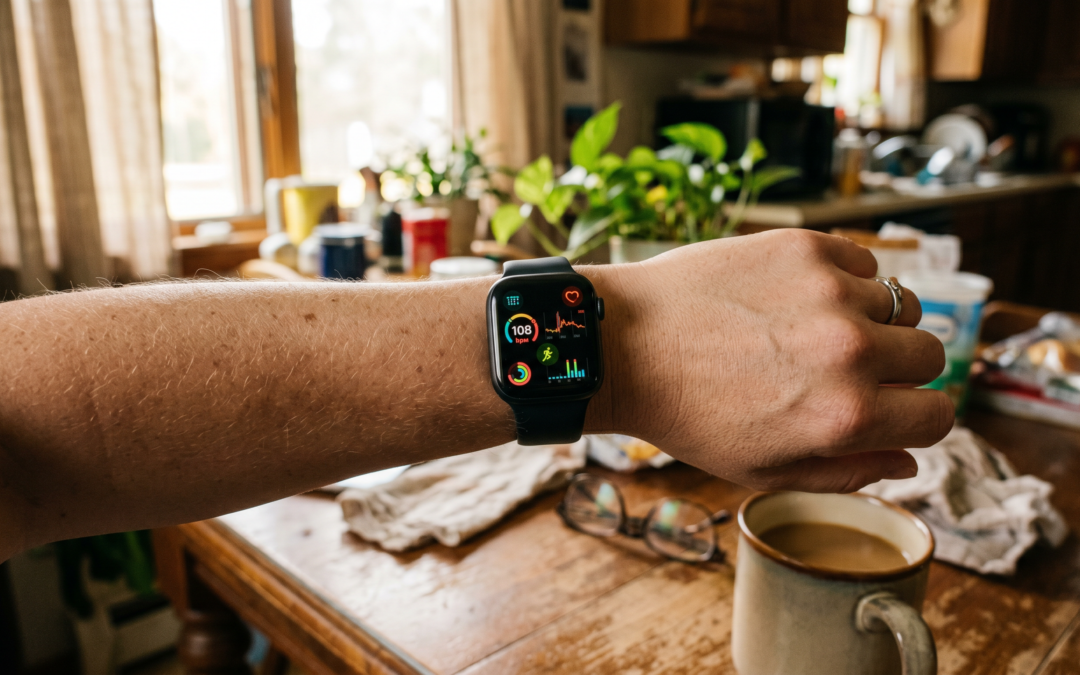
Apple Watch (Series 4 and later) was one of the first smartwatches to build fall detection into a mainstream device, and it remains one of the best implementations. It works on cellular models without your phone nearby, which matters. The tradeoff is the price point, and the fact that it works best within the Apple ecosystem.
Samsung Galaxy Watch series has comparable fall detection on its recent models, and works well with Android phones. Same basic functionality, similar limitations.
Both require a cellular plan (or being within range of a paired phone) to make emergency calls. If you’re often out of range of your phone, a cellular-capable model is worth the additional monthly cost.
A word about dedicated medical alert devices
Some people prefer a dedicated medical alert device over a smartwatch, and there are good reasons for that choice. Dedicated devices are simpler, often have better battery life, and are specifically designed for this purpose.
I’ve covered medical alert systems separately, including what to look for and which questions to ask before committing. If the smartwatch form factor doesn’t appeal to you, that article is a good place to start.
The main advantage a smartwatch offers over most dedicated devices is that it’s multifunctional enough that you’ll actually wear it, even if you resist wearing a device that feels clinical. A watch you wear every day because you like tracking your steps is also a fall detection device every time you put it on.
What to consider before buying
Battery life: most smartwatches need daily charging. If this is a problem, there are options in the dedicated medical alert space with much longer battery life.
The learning curve: a smartwatch has more features and requires more setup than a simple medical alert button. For someone who already uses a smartphone comfortably, it’s usually manageable. For someone who doesn’t, a simpler device might be a better fit.
Emergency contacts: whoever the watch is set to notify needs to understand what to do when they get the notification. Setting this up as a conversation before you need it is worth doing.
The bigger question
Fall detection is one tool in a larger picture. Staying strong and maintaining balance reduces the likelihood of falling. A safer home environment reduces the hazard level. A support network means someone notices sooner if something is wrong.
If you want to understand where you stand across all five areas of independence, including strength, home, and technology, the 3-minute assessment gives you a clear starting picture.
Take the 3-Minute Assessment
The watch won’t prevent you from falling. But it can make sure that if you do, you’re not alone.
Anne
by lynncarnes@gmail.com | May 29, 2026 | Community
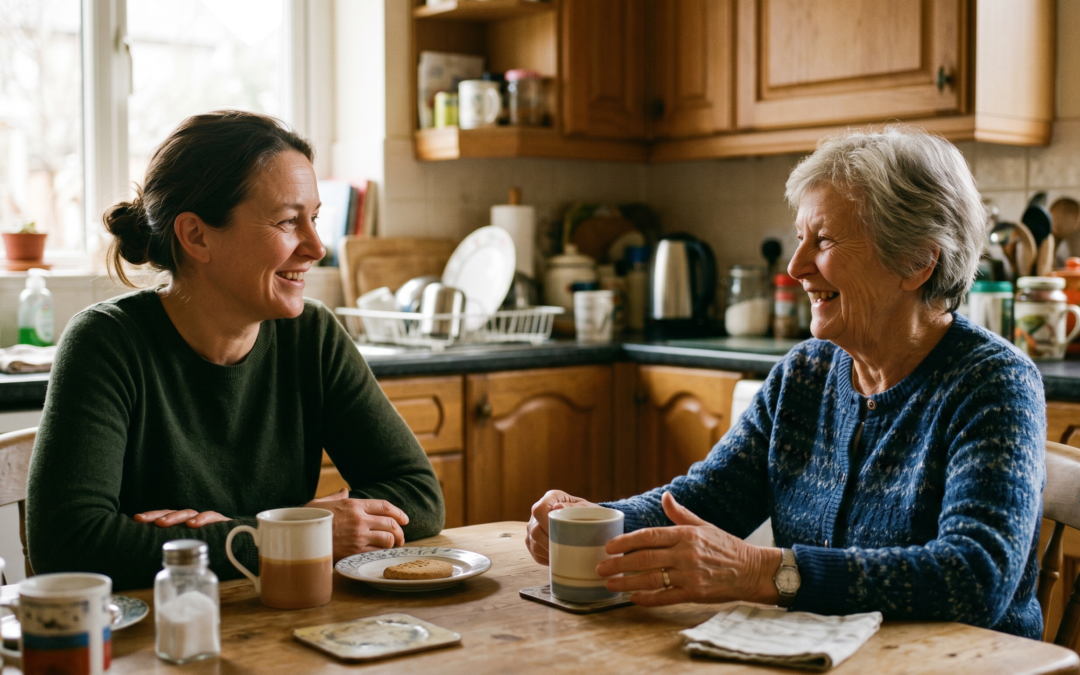
If you’re reading this, you’re probably the person in the family who finally decided someone has to say something.
You’ve noticed things. A parent who is slower on the stairs than they used to be. A house that’s gotten harder to keep up. A conversation that went sideways when you brought up the future, and now you’re not sure how to try again.
You are not alone in this. And the instinct to bring it up, to have the conversation before a crisis forces it, is a good one. The problem is usually not the intention. It’s the approach.
Why these conversations go wrong
Most aging conversations with parents go sideways not because the topic is impossible but because of how they start.
They start with a solution. “I think you should move closer.” “Have you thought about getting help around the house?” “I looked into some options.”
From a parent’s perspective, this sounds like: I’ve already decided what’s best for you.
The result is defensiveness. Resistance. “I’m fine. Don’t worry about me.” The conversation ends, the wall goes up, and the next attempt is harder than the first.
The most common mistake is leading with what you think should happen rather than asking what they think about what’s happening.
What actually works: leading with curiosity
The conversations that go well almost always start the same way. Not with a plan. With a question.
“I’ve been thinking about getting more prepared for the future. Can I ask you about some of this stuff?”
“I’ve been reading about aging at home. Can I share some of what I’ve been thinking?”
“I want to make sure I know what you’d want if something happened. Can we talk about that?”
These openers do something specific: they position the conversation as collaborative rather than advisory. You’re not coming with answers. You’re coming with questions. That’s a fundamentally different dynamic.
Three openers that work
The planning together opener: “I’ve been thinking about this for myself and for you both. Can we talk through what we each want?”
This is useful when you want to normalize the conversation by making yourself part of it. You’re not singling them out.
The “I want to know” opener: “I’ve realized I don’t actually know what you’d want if something happened. And I want to know. Can we talk about it?”
This frames the conversation as a gift to you, not an intervention on them. It’s honest and often surprisingly effective.
The soft check-in: “How are things feeling lately? Is there anything about the house or day-to-day stuff that’s been on your mind?”
This gives them the door without walking through it yourself. Sometimes the conversation you needed happens because you asked and then listened.
What not to say
A few things that reliably close the conversation:
“I’m worried about you.” (Signals surveillance, not care. They’ll reassure you everything is fine and shut down.)
“We’ve been talking about this and we think…” (Presenting a united family front feels like an ambush.)
“At your age…” or “when people get older…” (No one wants to be categorized.)
“You really should…” (Any form of “should” is a wall-builder.)
The goal of the first conversation is not to solve anything. It’s to open a door. A successful first conversation is one where they feel heard and where they’re willing to talk again. That’s it.
If it doesn’t go well the first time
It might not. Some parents aren’t ready. Some have been independent for sixty years and hear any conversation about the future as a threat to that independence.
If the first conversation ends in resistance or hurt feelings, don’t push. Let some time pass. Come back with a different angle or a smaller ask.
“I don’t need to talk about everything. I just want to know where the important documents are, in case something happens.”
“I’m not asking you to change anything. I just want to understand what you’re thinking.”
Smaller asks feel safer. They’re also often the way in.
It’s also worth considering that your parent may have thoughts and wishes they’ve been wanting to share but nobody ever asked. The conversation you’re dreading might be one they’ve been hoping someone would start.
The goal
I want to name what you’re actually trying to accomplish here, because it’s worth keeping in mind when the conversation gets hard.
You are not trying to take control. You are not trying to get agreement on a plan. You are trying to make sure that if something happens, you know what they’d want, and they know you’re someone who can handle the conversation.
That’s the goal. A door. Not a decision.
And from the other side, speaking as someone who is in the parent role now, I want you to know something. Most of us know this conversation needs to happen. We just need it to feel like connection rather than assessment.
If this article helped, share it with someone who’s been putting off the conversation. Sometimes it’s easier to start with “I read this and thought of you” than with the first word on your own.
Take the 3-Minute Assessment
The door you open today might be the most important one.
Anne
