
by lynncarnes@gmail.com | Jul 30, 2026 | Preparedness, Stories
We had wills. We had medical directives. We had an executor we trusted and an estate plan we’d paid a lawyer to draft. We thought we were good.
Then my husband ended up in the hospital for two months after unexpected surgery, and I found out, in the quietest and most exhausting way, that we weren’t good at all.
Not the legal part. The legal part was fine. The part that wasn’t fine was everything else. The bills. The car. The calls. The salt bags in the basement. The cats. The support network I’d never thought to build because I’d always assumed I wouldn’t need one.
I call that distance, the gap between thinking you’re prepared and actually being prepared, the Prepared Gap. Most people I talk to are living inside it right now. They have a will. They have an insurance policy. They might have a living will tucked somewhere in a drawer. And they’ve filed all of that under “done” in their heads.
A will is not a plan. A plan is what works on an ordinary Tuesday when something goes wrong.
Here’s how the Prepared Gap shows up in five specific areas, and what closing it actually looks like.
Area 1: Your Documents
The test I use is this: if your family had to act on your behalf tonight, could they? Could they pay a bill, talk to your doctor, make a decision without calling you or guessing?
Most people who think they’re covered have one or two of the right pieces. What they’re usually missing is the whole set, in one place, that someone else can actually find and use.
There are five documents that answer that test.
The first is a durable power of attorney for finances. This names the person who can manage your money and accounts if you can’t. The word “durable” matters. A regular power of attorney ends if you become incapacitated. A durable one continues. That’s the version you want. Free forms exist through most state attorney general websites. Services like Trust & Will or LegalZoom work. A local estate attorney works. All three paths get you there.
The second is a healthcare proxy. This names the person who makes medical decisions for you when you can’t speak for yourself. It is not the same as an advance directive, the proxy is the person, not the wishes. Name a backup in case you and your primary proxy are in the same accident. Hospital social workers ask for this one first.
The third is an advance directive, sometimes called a living will. This is your written instructions about medical treatment if you can’t communicate them. People put this one off the longest because it asks you to think about hard things. I put it off too. But doing it once, even imperfectly, is better than not doing it. Free forms are available through aging.gov and most state health departments.
The fourth is a medication list. Not a legal document. A logistical one. Every prescription, every supplement, every over-the-counter pill, with dosages, allergies, and recent surgeries. Emergency room nurses wish more people had this. Review it every six months.
The fifth is an emergency contact sheet. One page, names and numbers. Proxy, power of attorney, family, doctor, attorney, a trusted neighbor, the friend who’d step in if no one else could. Print two copies. One for the folder. One for the fridge. Tell two people where they are.
All five go in one labeled folder, in a place anyone can find without asking.
If you have none of these, start with the emergency contact sheet. Twenty minutes, no lawyer, no fees.
If you have some but not all, take one hour this weekend to find the gaps.
If you have all of them but scattered in three different drawers, gather them. Put them in one place. Then tell two people where that place is. That last step is the one most people skip.
Area 2: Your Finances
When my husband was in the hospital, I discovered something that should not have been a discovery: I didn’t fully understand how we paid our bills.
He had a paper Rolodex. Columns for accounts, amounts, due dates, passwords. He managed it all. I hadn’t written a check in close to a decade. I had to learn his entire system while I was exhausted and scared and driving back and forth to the hospital.
The Rolodex was imperfect. But it was there. That matters more than people realize.
I think about my brother, who died without leaving any of that. My sister and I spent days sorting through roughly 25 bags of his papers to piece together his financial life. Not 25 folders. 25 bags. We found bank statements in the washing machine. We eventually figured out what accounts he had and what loans existed, but there was a stretch where we genuinely didn’t know if something was going to fall through the cracks because only he had ever known it was there.
He couldn’t tell us anything because none of us knew we’d need to ask.
The financial piece of real preparedness is not a will and not a beneficiary form. It’s documentation. A list of what bills exist, when they’re due, how they’re paid, and the login information. Something another person could open and follow without calling you once.
Automating bill payments where possible is part of this. So is making sure that if you have a system, the person who might need to use it actually knows the system exists and where to find it.
Area 3: Your Home
This one is the quietest gap, and in some ways the most expensive to close after the fact.
When my husband came home from the hospital, our house had a problem. Stairs. We have a lot of them. He came home weak. Our family room became a bedroom for a while. The recliner couch turned out to be one of the most practical investments we’d ever made.
We adapted. But we adapted reactively, in a hurry, at the worst possible time.
What I’ve done since then is start asking a different question. Not “do I need this yet?” but “would I rather choose this now, while I’m steady, or scramble for whatever’s available after something happens?”
I added grab bars to my bathroom about six months ago. Brushed bronze, to match the rest of the room. One vertical near the shower entry, one horizontal inside. Nobody told me to. I hadn’t fallen. I just decided I’d rather pick the finish while I had the luxury of picking it.
Most of my friends don’t notice them. I use them every day.
I also changed how we handle the water softener. It’s in the basement, four stairs up from the kitchen, twelve stairs down to the unit. The salt comes in forty-pound bags. For years that was just a chore. At some point it became something I dreaded. We replaced the unit with one that comes with a service plan: they deliver the salt and add it for us.
Such a small thing. One less trip on the stairs with something heavy.
The big home modifications get all the attention, ramps, stairlifts, full bathroom renovations. Those matter. But the small things matter too. The task that quietly becomes a dread. The errand that used to be routine and now costs you something. You don’t have to wait for a problem to solve one. You just have to notice when “no big deal” has quietly become “actually kind of a deal.”
Area 4: Your Body
Seventy-five percent of adults 50+ prefer to stay in their own home as they age. That’s from AARP’s 2024 Home and Community Preferences Survey. The number makes sense. What doesn’t always follow from that preference is action.
Staying in your home is a physical project, not just a planning one. Your balance, your strength, your mobility, these are the things that determine whether you can actually do it. And they respond to consistent, deliberate work in a way that most people underestimate.
Simple balance exercises, done regularly, can meaningfully reduce fall risk. Tai chi is one of the best-studied options. Strength work protects the joints and the stability needed for stairs, for carrying things, for getting up from a chair without assistance.
The mistake is thinking this is something to start when you “need” it, after a fall, after a scare, after a diagnosis. By then you’re catching up instead of building ahead. Small, consistent work done now compounds forward. That’s the whole bet.
This isn’t a lecture about exercise. It’s a note about independence. The two things are connected in a direct way that I don’t think we talk about honestly enough.
Area 5: Your People
The gap I underestimated most was this one.
I’m very independent. I’ve always operated that way. I assumed that counted for something when things went wrong.
Then both of my cars broke down at the same time, on the same weekend my husband was in the hospital. I stood in the garage alone, trying to figure out how I was going to get to the mechanic, and then get to the hospital that afternoon.
A neighbor called. She drove me. She went with me when I bought a new car. She spent most of her weekend helping me. I didn’t know what I was worth to her until that weekend, and I still feel like I owe her.
That’s when I stopped thinking “community” was a soft word. It’s the word for the people who show up when your plan falls apart.
The planning question here is honest and a little uncomfortable: who would actually pick up if you called them at 6am with a real problem? Not who you hope would. Not who you’re friendly with. Who would actually answer and actually show up?
Most people, when they think through that list carefully, come up with fewer names than they expected. That’s not a failure. It’s information. It tells you where to put your energy before you need to make that call.
Building that network, tending those relationships before something happens, is the part of aging-in-place planning nobody talks about because it doesn’t feel like planning. It feels like friendship. It is friendship. It’s also the thing that keeps you home when everything else falls short.
—
Where to Start
You don’t have to close all five gaps at once. That’s not how any of this actually gets done.
Pick the one that made you the most uncomfortable while you were reading this. Start there.
If it’s documents: emergency contact sheet, this weekend, twenty minutes.
If it’s finances: spend one hour writing down every recurring bill, how it gets paid, and where the login lives.
If it’s home: walk through your house and make a list of the things that are already a little harder than they used to be. Then address one.
If it’s your body: add ten minutes of intentional balance or strength work three times this week.
If it’s your people: reach out to one person you’ve let go quiet. No occasion needed. Just reach out.
The goal isn’t a perfect plan. The goal is a real one. A plan is a folder another person can open and use. A plan is a name they can call. A plan is a house that works for the person you are at 75 or 80, not just the person you were at 55.
Everyone thinks there’s time. And there often is. But the people who used that time well didn’t wait until the gap showed itself. They closed it quietly, on an ordinary Tuesday, before it ever became an emergency.
That’s what this is for.
—
If any of this landed, the next step is easier than you’d think. Take three minutes with the free Independence Assessment. You’ll see exactly which of the five gaps is widest for you right now, and where to start closing it. Link below.
Anne is the founder of The Independence Plan and the creator of Wayfinder, a guided planning tool for adults 55+ who want to stay in the home they love. The Independence Assessment is free and takes about three minutes. You can find it at theindependenceplan.com.
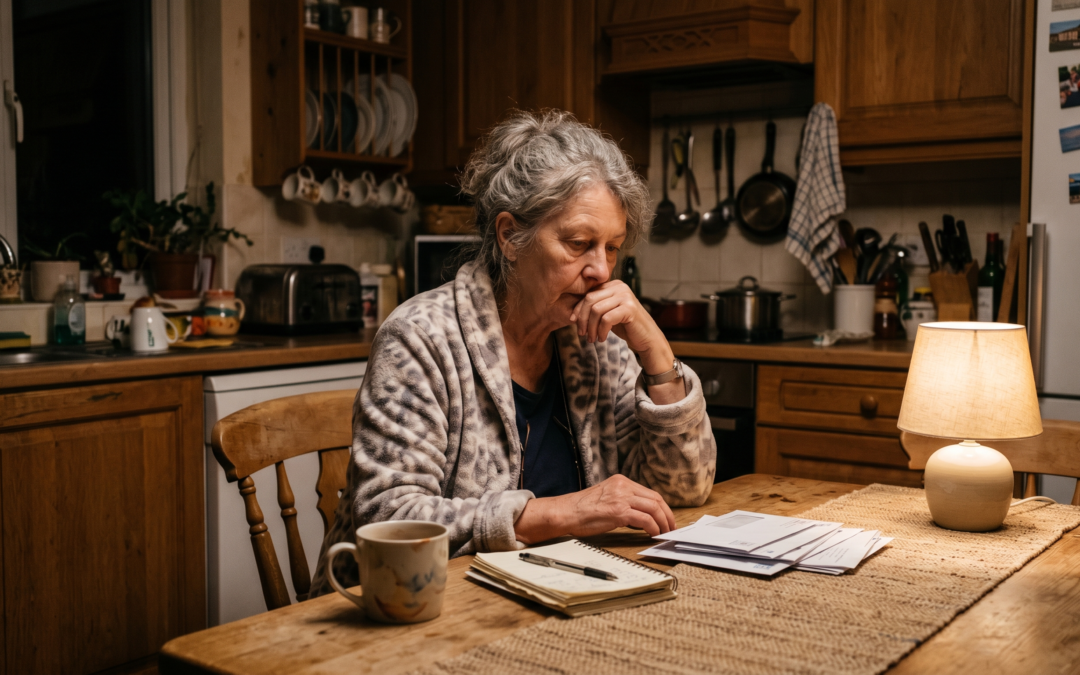
by lynncarnes@gmail.com | Jun 24, 2026 | Preparedness
We had wills.
We had medical directives.
We had an executor we trusted.
I would have told anyone who asked that we had it handled. I had told several people that, in passing, when the subject of “have you done your estate planning” came up at dinner.
Then my husband ended up in the hospital for two months after surgery we hadn’t anticipated, and I found out what “prepared” actually meant.
It didn’t mean the wills. It didn’t mean the directives. Those mattered, but they weren’t the thing that was about to test me.
The thing that tested me was the bills.
He paid them. He paid them with checks, on a paper Rolodex, on a schedule I had never paid attention to. I had not written a check in ten years. I did not know which company we used for our internet, or when the property tax was due, or where the box of important documents was kept (because he had moved it at some point and I had never asked).
I sat at our kitchen table the second night he was in the hospital and tried to log into our bank, and realized I did not know the password. I knew the answer to one of the security questions because I had set it up years ago. I got in.
That was the easy part.
What “prepared” actually has two parts
The legal part is the part everyone talks about. Wills, advance directives, healthcare proxies, durable powers of attorney. They matter. They keep your wishes intact when you cannot speak for them yourself. They keep your family out of court.
The operational part is the part that almost nobody talks about. Who pays which bills. Where the passwords are. Which bank you actually use. Who has the key to the safe deposit box. Whether the property tax is paid quarterly or annually. Where the cats’ vet records are. The name of the friend who would feed them if you needed her to.
Most people I know have one of those two parts in fairly good shape. Almost nobody has both.
I had the legal part. I had it in a folder. I did not have the operational part. The operational part lived in my husband’s head and in a paper Rolodex in our kitchen.
The legal part is what your lawyer helps you with. The operational part is what nobody helps you with, because it is too specific to your life. Nobody else can sit down and write out who pays your electric bill. You have to do it yourself.
What three weeks of small panics taught me
It took me about three weeks to feel like I had a handle on it. Three weeks of small panics and late discoveries. I would not have called it the worst part of those two months. But it was the most preventable.
What I learned is that operational preparedness is a folder, not a document.
The folder I keep now has five items in it. Not because five is a magic number, but because those five answer the questions a person trying to help you would ask first.
I have written about those five documents in more detail here, with how to get each one. Most of them are free. The two that have a fee can be done through any of three paths. I name a specific service I have used (LegalZoom, with which I have an affiliate relationship, disclosed there), but free state forms also work for most people. Pick the path that fits you.
The point is not which path. The point is the folder.
One folder, two people
I keep mine in a fireproof box in my front hall closet. The label on the outside says “Open in an emergency.” My daughter knows where it is. My sister knows where it is.
That is the whole system.
It is not elaborate. It does not cost much. It took me about six hours of dedicated time over a couple of weeks to put it together, once I knew what I was building.
The hardest part was not gathering the documents. The hardest part was admitting that having wills did not mean I was prepared.
What I wish I had done before
If I could go back to the version of me who was telling people we had it handled, I would say this:
Run the test. Tonight. If you cannot be home for some reason in the next two weeks, could a trusted person walk in and pay your bills, talk to your doctor, manage your house, take care of your animals, and know who else to call? If yes, you are operationally prepared. If no, that is the gap.
The legal documents matter. But they are not the whole of it.
You probably know whether you are in the same place I was. Most of us know.
If you have the legal part in place and want the list of the five operational documents that actually carried us through the next thing, the article I wrote on those is here. It is the list, with how to get each one. No sales page. Just the list.
I would not wish my way of learning this on anyone. Reading the list takes ten minutes. Getting the first one in place takes about twenty.
If you want to know where you stand across all five things that decide whether staying in your home actually works, the Independence Assessment takes about three minutes. Twenty questions. A specific starting point.
I’m glad you’re here.
Anne

by lynncarnes@gmail.com | May 29, 2026 | Preparedness
Most emergency preparedness advice is written for a 35-year-old with a go-bag.
The advice is: pack a backpack, have a three-day water supply, know your exit routes. Be ready to evacuate fast.
If that’s not your situation, or if the standard framework doesn’t quite fit where you are in life, this is for you.
Emergency preparedness for older adults is a real and different topic. The needs are different. The vulnerabilities are different. The resources available, including neighbors, technology, and community connections, can be different too. Let me walk through it the way I think about it for my own home.
The essential difference
The main thing that makes emergency preparedness different after sixty is this: the standard advice was optimized for people who are healthy, highly mobile, have no special medical needs, and can improvise their way through unexpected situations.
Many older adults are managing medications on a fixed schedule. Some have mobility considerations. Some live alone. Some have conditions that require medical equipment that depends on power.
A plan that doesn’t account for these realities isn’t really a plan for you. It’s a plan for someone else.
The medication situation
This is the biggest practical difference. If you’re on medications that require refrigeration, or that must be taken on a specific schedule, a three-day disruption is not just inconvenient. It can be dangerous.
Your emergency plan needs to include:
A copy of your medication list (not just the bottles, but a paper list you can carry), with doses, prescribing doctors, and pharmacy contact information. I wrote about building this list in detail elsewhere.
A supply of medications that doesn’t run to zero the day before a refill is due. Talk to your doctor about whether a slightly larger emergency supply is possible for your situation. Many insurers allow one-time emergency overrides.
Knowledge of how long your critical medications can go without refrigeration (your pharmacist can tell you) and what an alternative power source looks like if needed.
Room by room
Kitchen: Keep at least three days of non-perishable food and water. The standard recommendation is one gallon of water per person per day. A manual can opener. A battery-powered or hand-crank radio. A flashlight with fresh batteries.
If you use a natural gas stove, know where the shutoff valve is and when to use it. If you use electric, know what you’ll do if power is out for an extended period.
Bedroom: A flashlight within reach of the bed. Shoes or slippers accessible from the bed so you can move safely if you have to get up quickly in the dark. Your phone charging cord nearby. A basic first aid kit.
If you sleep with hearing aids or glasses off, have a consistent place for them near the bed so you can find them without light.
Bathroom: Emergency medications here if this is where you take them. A backup supply of any over-the-counter items you rely on regularly.
Home office or documents area: A go-folder with copies of essential documents: insurance cards, identification, medication list, emergency contacts, and the name and number of your primary doctor. This folder should be something you can grab in a hurry.
Your important legal documents, the will, the healthcare proxy, the advance directive, should have a safe storage location that someone else knows about. These are the documents you need to survive an emergency AND the documents your family would need if you didn’t.
The power situation
Power outages affect older adults differently because of medical equipment and medication storage. A few things to address ahead of time:
If you use any equipment that requires electricity, contact your utility company about their medical baseline or life support program. Many utilities maintain priority restoration lists for customers with power-dependent medical needs.
If you have a portable generator, know how to use it safely before you need to (carbon monoxide from generators used indoors is a real danger). The Red Cross and FEMA have guidance on generator safety that’s worth reading.
Battery backup devices (power banks) for phones are inexpensive and worth having. Know where your phone charger is and that it’s accessible.
The neighbor plan
This is often overlooked in emergency preparedness conversations, but it may be the most important item for older adults.
Who knows you’re home? Who would check on you if the power went out for three days? Who has a key?
Having one or two neighbors who know your situation, who have your number and you have theirs, and who have agreed to check on you in an emergency is a form of preparedness that no amount of supplies can replace.
If this relationship doesn’t exist yet, building it before you need it is both a preparedness investment and a community investment.
The evacuation consideration
Some emergencies require leaving your home. If you have mobility considerations or don’t drive, you need a plan for this before the emergency happens, not during it.
Who would take you? Where would you go? Do you have what you’d need for an extended stay somewhere else, including medications and documents?
The local emergency management office often has registration programs for residents who would need evacuation assistance. These are underused and worth knowing about.
A word about the planning itself
I used to put off emergency preparedness because it felt like a large project. It is, if you try to do it all at once.
The way I finally got it done was to treat it as a series of small tasks: make the medication list this week, put the document folder together next week, check the flashlight batteries the week after that.
The Independence Assessment asks about preparedness as one of its five pillars. If you want a clear picture of where your overall plan stands, that’s a useful starting point.
Take the 3-Minute Assessment
Prepared doesn’t mean ready for everything. It means ready for the most likely things. That’s enough.
Anne

by lynncarnes@gmail.com | May 29, 2026 | Preparedness
I’m going to ask you one question. Just one.
If you were admitted to the hospital tonight, could the person closest to you navigate your life for a week without you?
Not with difficulty. Not by improvising their way through it. Actually navigate it. Know what bills need to be paid. Know your medications and your doctors. Know where your important documents are. Know what you’d want if a decision needed to be made.
Take a moment with that question before you read further. Most people, when they actually sit with it, find the honest answer is: probably not.
What the question reveals
There’s a version of preparedness that feels real but isn’t. Having a will that hasn’t been updated since the nineties. Knowing you should set up a healthcare proxy but not having done it. Keeping your password system in your head because it’s “easier.”
Feeling prepared and being prepared are two very different things. The question above cuts through the feeling and asks about the actual state.
If your answer is yes, fully, without reservation, you are ahead of most people. Genuinely. That’s not a small thing.
If your answer is somewhere between “mostly” and “not really,” you’re in the company of the majority of adults over 55, including me before I got serious about this.
What it would actually take for the answer to be yes
The requirements fall into roughly five areas. Not coincidentally, they map to the five pillars of The Independence Plan.
Someone can speak for you medically. You have a healthcare proxy designated, they know what you’d want, and the document is findable. If a doctor needs to make a decision while you can’t communicate, someone with authority is there.
Someone can handle your finances. The bills are accessible. The accounts are findable. A power of attorney is in place if needed. Your financial picture doesn’t require you to be conscious to function.
Your home is manageable. If you were recovering, if someone else needed to care for you at home, your house would work for that. No critical single points of failure.
Someone would know who to call. Not just a spouse or a child, but a network. The name of your doctor. The neighbor who has a key. The friend who could be there quickly. The village, documented.
The technology you depend on is understood by someone else. Your phone. Your accounts. What apps you use and why. Not for them to take over, but for them to help if needed.
Most people have some of these. Very few have all of them. The gap between “some” and “all” is where most of the risk lives.
Why most people who feel prepared aren’t
The feeling of preparedness often comes from having done the visible parts. The will. Maybe the advance directive. The sense that you’ve “thought about” the future.
The invisible parts are what trips people. The operational stuff. The daily-life infrastructure that your partner or children don’t know about because it’s never come up. The systems that work fine when you’re running them and break down the moment you aren’t.
I know this from personal experience. We had wills. We had directives. We thought we were good. And then my husband was hospitalized for two months and I found out exactly how much operational preparedness we’d skipped.
The next step
If the one question made you uncomfortable, that discomfort is useful information. It’s telling you something specific about where to start.
The Independence Assessment takes three minutes. It asks about all five areas and gives you a picture of where you’re strong and where the gaps are. It doesn’t ask you to do everything. It helps you see what to focus on first.
Take the 3-Minute Assessment
One question. Now you know.
Anne
by lynncarnes@gmail.com | May 29, 2026 | Preparedness
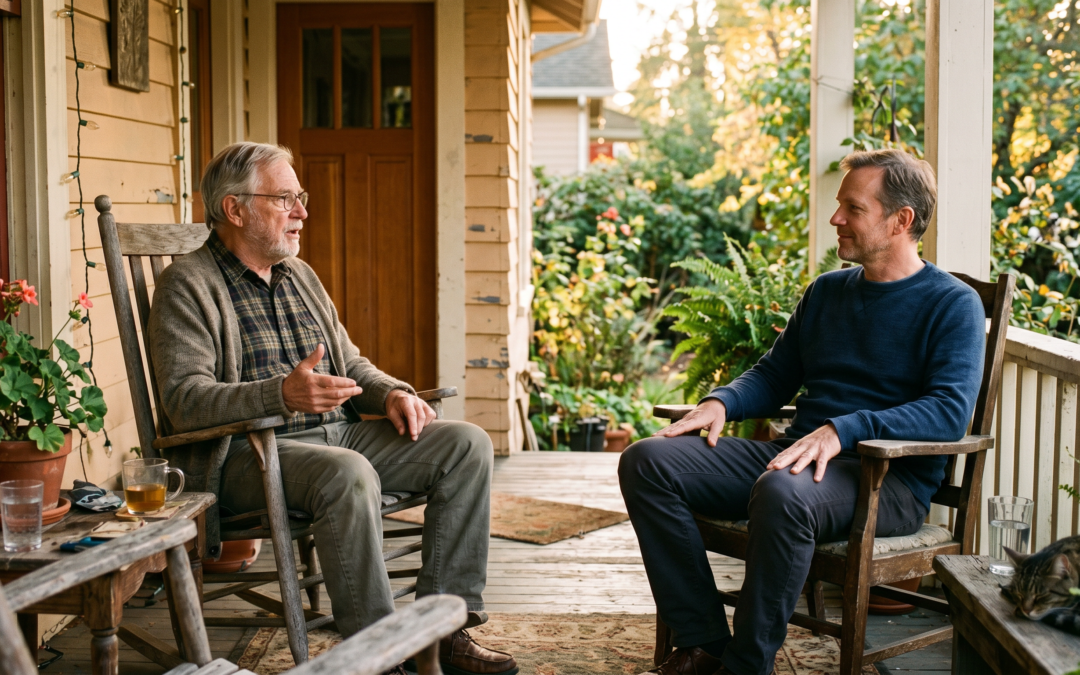
If you’re reading this, you’re probably the person in your family who finally decided someone has to say something.
Maybe you’ve noticed things. A parent driving when they probably shouldn’t. A house that’s harder to keep up than it used to be. A silence on the other end of the phone when you ask how things are going that lasts a beat too long.
You want to have a conversation. You’re not sure how to start it without making things worse.
That feeling is exactly right, and it’s worth paying attention to. Because the way you open this conversation will determine whether a door opens or a wall goes up.
Why this is harder than it should be
Talking to a parent about the future is complicated by a specific dynamic that doesn’t exist in most conversations. You are asking someone who has been the authority figure in your relationship to let you into a part of their life they may be working very hard to keep private.
For many parents, independence is not just a preference. It’s an identity. Decades of taking care of themselves and others. Being the one people called when things went wrong. Accepting that things are changing, or even acknowledging the conversation is warranted, can feel like a loss that nobody has put words to yet.
This doesn’t mean the conversation shouldn’t happen. It means your job at the start is not to solve anything. It’s to make the conversation feel safe enough to continue.
The biggest mistake adult children make
Leading with solutions.
“I’ve been thinking, maybe you should consider…” “We found this great place that might…” “There’s a service that could help with…”
Every one of these opens with your conclusion. And when someone hears your conclusion before they’ve been asked what they think, they feel bypassed. Assessed. Managed.
The instinct makes sense. You care. You’ve been thinking about this. You want to help. But the conversation that starts with your answer is almost always the one that ends with “I’m fine, stop worrying.”
What to do instead
Ask first. That’s the whole approach.
Not leading questions designed to get your parent to agree with what you already think. Actual questions, with actual curiosity, about what they’re experiencing and what they want.
“What does a good day look like for you right now?”
“Is there anything about the house that’s been on your mind?”
“What would you want us to do if something happened and you needed help?”
“Is there anything you’ve been thinking about but not sure who to bring up with?”
These questions give your parent room to tell you what they’re actually experiencing, not what they think you want to hear. And that is the only conversation worth having.
What success looks like at the end of a first conversation
This is worth knowing going in: a successful first conversation is not one where you solve something. It’s not one where your parent agrees to any particular plan.
A successful first conversation is one where they feel heard, where they know they can bring something to you, and where they’re willing to talk again.
That’s it. If you walk away from the first conversation having opened a door, you’ve done the most important thing. Everything else happens over time, through many conversations, through continued presence.
A few things that help
Timing matters. Don’t bring this up right after something difficult, a doctor’s appointment, a near-miss incident, a moment of visible struggle. Those moments create defensive postures. Find a time when things are calm, when you’re doing something ordinary together, when the conversation can happen alongside life rather than as an interruption to it.
Shorter is better, especially at first. You don’t have to cover everything in one conversation. In fact, trying to often backfires. One question, answered honestly, and then let it go. Come back to it next time.
Your own vulnerability helps. “I’ve been thinking about my own future and realized I don’t have a lot of this figured out either” is a conversation opener that removes the evaluation dynamic entirely. You’re not the adult checking in on the child. You’re two people navigating the same territory.
Listen more than you talk. If you’ve asked a question and your parent is talking, your only job is to listen and ask follow-up questions. Not to redirect. Not to problem-solve. Just to understand.
If your parent doesn’t want to talk
Some parents won’t. Some will shut the conversation down cleanly and consistently.
If this happens, a few things are worth remembering.
You can plant a seed without forcing the outcome. Saying “I just want you to know I’m here when you do want to talk about any of this” and then leaving it is a real contribution to a future conversation.
You can address the practical without requiring the emotional. “Can you just tell me where the important documents are? I don’t need to know everything, just where to look if something happened.” That’s a smaller ask that doesn’t require your parent to acknowledge vulnerability.
And in some cases, a different family member is the right messenger. Relationships within families are complicated. The person who starts the conversation doesn’t have to be you.
One more thing
If you found this useful, the person in your life who needs it most is probably not you. It’s whoever hasn’t started the conversation yet.
Send it to your sibling. To a friend who’s been procrastinating. To anyone in that position where they know something needs to happen and just aren’t sure how to start.
Take the 3-Minute Assessment
The conversation doesn’t have to go perfectly. It just has to start.
Anne
by lynncarnes@gmail.com | May 29, 2026 | Preparedness
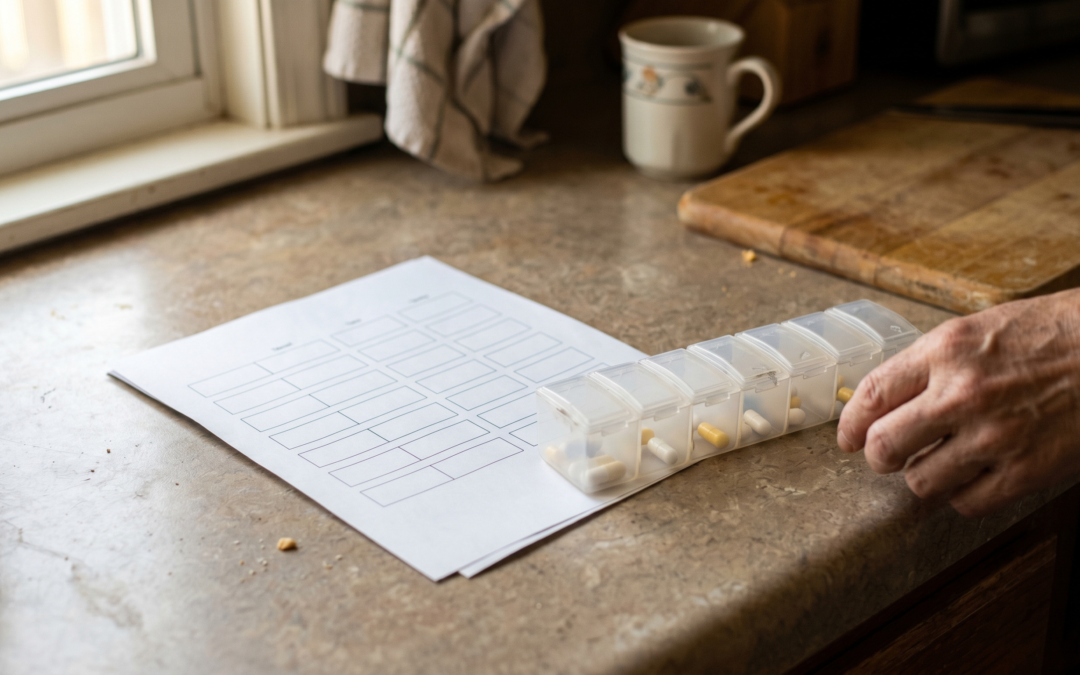
Every paramedic, every ER nurse, every doctor I’ve ever talked to says the same thing: the medication list is the document they wish every patient had.
Not the advance directive. Not the insurance card. The medication list.
Here’s why. When someone arrives in an emergency room unable to speak for themselves, the team needs to know what’s in their system. What medications. What doses. What they’re allergic to. Getting that information wrong, or not having it at all, can turn a manageable situation into a dangerous one very quickly.
Most people don’t have this list. Most people who are on six or eight medications have them stored in their head, or scattered across three pharmacy apps, or in a cabinet no one else knows to open.
This is one of the easiest things to fix. And it takes about twenty minutes.
What goes on the list
A good medication list has five things for each medication:
The name. Both the brand name and the generic name if you know it. ER teams use generic names. Pharmacists can help you fill this in.
The dose. The number on the bottle. Not what you actually take (though you can note that separately). What’s prescribed.
What it’s for. One line. “Blood pressure.” “Thyroid.” “Anxiety.” The medical team doesn’t need your full history. They need context.
The prescribing doctor. Name and phone number. This becomes important when teams need to verify something quickly.
How long you’ve been on it. Approximately is fine. “Two years” or “since 2019.” This helps the team understand your baseline.
Beyond medications, include:
- Allergies, including what happens when you have a reaction (rash, breathing difficulty, nausea)
- Over-the-counter supplements and vitamins you take regularly (these interact with medications more than people realize)
- Your primary care doctor’s name and number
- Your pharmacy name and number
- Your emergency contact
Where to keep it
The list is only useful if someone can find it.
Three copies. One on your person or in your wallet (a folded piece of paper works fine). One on the refrigerator. One with whoever would be called in an emergency.
The refrigerator sounds like an odd choice, but emergency responders are trained to look there. It’s a known location. If you use a standard medical information holder (they’re inexpensive, often called a “Vial of Life”), it goes on the refrigerator door.
A digital copy in your phone’s health app (iPhone Health or Android equivalents) is also useful. Emergency responders can sometimes access this from the lock screen.
The pharmacy shortcut
If you’re on multiple medications and the thought of writing everything down is overwhelming, your pharmacist is your best friend here.
Call your pharmacy and ask for a printout of all your current prescriptions on file. They can generate this in minutes. It won’t have everything, but it gives you a starting point you can fill in from there. Ask them to include generics if your list shows only brand names.
Your doctor’s office can also provide a current medication list from your chart. Many practices now have patient portals where you can download this directly.
The part people forget
I want to say something about supplements, because this is the piece that gets left off the most.
Fish oil, melatonin, turmeric, vitamin D, CoQ10, magnesium — these interact with prescription medications. Blood thinners and fish oil. Antidepressants and St. John’s Wort. Thyroid medication and calcium supplements (they should be taken hours apart).
A clinician cannot catch interactions they don’t know about. If you take supplements, they go on the list. All of them.
Keep it current
The list is only as good as the last time you updated it. A few simple habits:
When a new medication is prescribed, add it before you leave the doctor’s office.
When you stop a medication, cross it off.
Review the whole list once a year, ideally at your annual physical. Ask your doctor to verify it’s complete and current. This review has a side benefit: it often surfaces duplications or outdated medications that nobody caught.
This is one of the five
The medication list is one of the five documents I think every adult over 55 should have in place. The others cover legal preparedness, emergency contacts, financial access, and what to do if something happens to you.
If you want to know where you stand on all five, the Independence Assessment takes three minutes and gives you a clear picture of what you have and what’s missing.
Take the 3-Minute Assessment
Your medication list won’t prevent anything bad from happening. But it gives the people caring for you exactly what they need to help you.
Anne
