
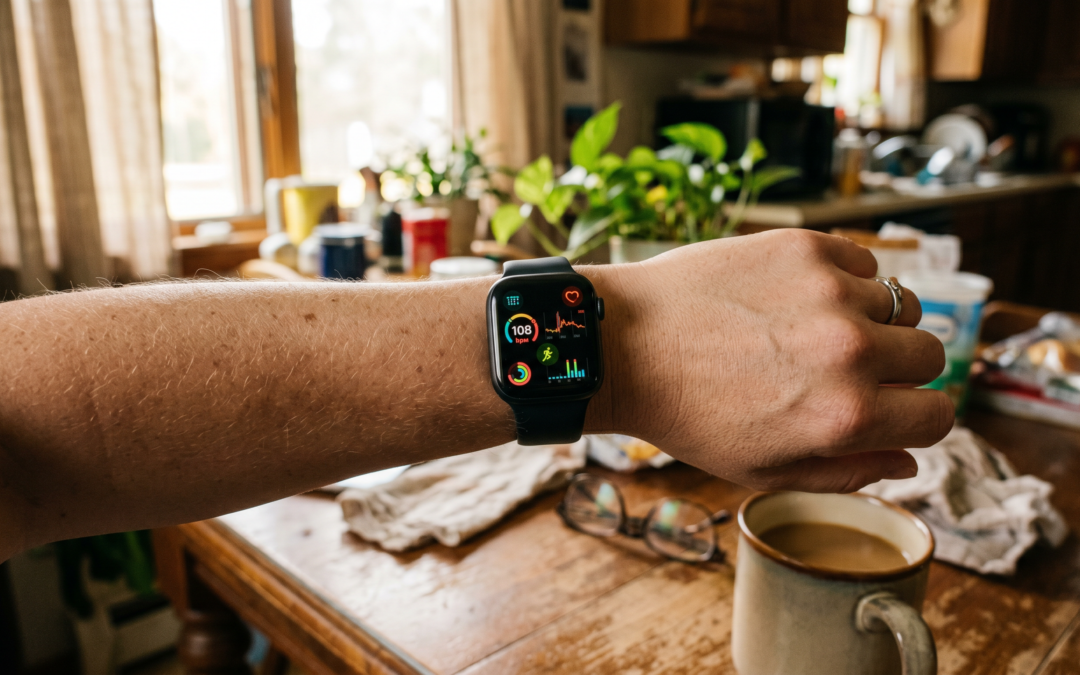
Most people who buy a smartwatch focus on the same handful of features: step count, heart rate, sleep tracking. They’re useful. They’re also not what I want to talk about.
The feature I want to talk about is fall detection.
It’s not marketed as prominently as the fitness features. It doesn’t make the front page of the product comparison articles. But for adults over 60 who live alone or spend time alone, it may be the most practically important thing a wearable can do.
How fall detection actually works
When you fall, your body goes through a specific pattern of motion: a rapid acceleration downward, followed by impact, followed by a period of not moving. Smartwatches with fall detection use the accelerometer and gyroscope in the device to recognize this pattern.
If the watch detects a fall and you don’t respond to a quick check-in prompt, it automatically calls emergency services and sends a notification to your emergency contacts, including your location.
That last part matters: your location. A medical alert device tethered to your home can’t call for help when you fall on a walk. A smartwatch can, because it’s on your wrist wherever you go.
What this looks like in real life
The scenario most people imagine is a dramatic fall on a staircase. That happens. But many of the falls that become serious are quieter than that.
Someone falls in the backyard and can’t reach their phone. Someone falls in the garage. Someone falls on a walk and their phone slides out of reach.
In situations like these, a watch that detects the fall and sends for help automatically is the difference between a bad hour and a bad outcome.
The feature isn’t foolproof. Not every fall is detected. And sometimes the watch triggers a false alarm from a car ride or an arm movement that looks like a fall. These are real limitations worth knowing about.
But for people who live alone or who spend meaningful time without other people present, the question isn’t whether fall detection is perfect. It’s whether having it is better than not having it.
The two main options right now
Apple Watch (Series 4 and later) was one of the first smartwatches to build fall detection into a mainstream device, and it remains one of the best implementations. It works on cellular models without your phone nearby, which matters. The tradeoff is the price point, and the fact that it works best within the Apple ecosystem.
Samsung Galaxy Watch series has comparable fall detection on its recent models, and works well with Android phones. Same basic functionality, similar limitations.
Both require a cellular plan (or being within range of a paired phone) to make emergency calls. If you’re often out of range of your phone, a cellular-capable model is worth the additional monthly cost.
A word about dedicated medical alert devices
Some people prefer a dedicated medical alert device over a smartwatch, and there are good reasons for that choice. Dedicated devices are simpler, often have better battery life, and are specifically designed for this purpose.
I’ve covered medical alert systems separately, including what to look for and which questions to ask before committing. If the smartwatch form factor doesn’t appeal to you, that article is a good place to start.
The main advantage a smartwatch offers over most dedicated devices is that it’s multifunctional enough that you’ll actually wear it, even if you resist wearing a device that feels clinical. A watch you wear every day because you like tracking your steps is also a fall detection device every time you put it on.
What to consider before buying
Battery life: most smartwatches need daily charging. If this is a problem, there are options in the dedicated medical alert space with much longer battery life.
The learning curve: a smartwatch has more features and requires more setup than a simple medical alert button. For someone who already uses a smartphone comfortably, it’s usually manageable. For someone who doesn’t, a simpler device might be a better fit.
Emergency contacts: whoever the watch is set to notify needs to understand what to do when they get the notification. Setting this up as a conversation before you need it is worth doing.
The bigger question
Fall detection is one tool in a larger picture. Staying strong and maintaining balance reduces the likelihood of falling. A safer home environment reduces the hazard level. A support network means someone notices sooner if something is wrong.
If you want to understand where you stand across all five areas of independence, including strength, home, and technology, the 3-minute assessment gives you a clear starting picture.
The watch won’t prevent you from falling. But it can make sure that if you do, you’re not alone.
Anne