
by lynncarnes@gmail.com | May 29, 2026 | Strength
Most of the conversation about aging in place centers on people who are healthy and fully mobile.
That’s useful. But it leaves out a large part of the reality.
The majority of adults over 65 are managing at least one chronic condition. Many are managing two or more. Arthritis. Heart disease. Diabetes. COPD. Osteoporosis. These are common. They don’t automatically mean you can’t live in your own home. But they do mean your planning needs to account for them.
Managing a chronic condition well is partly a medical question. That part belongs to your doctor. But there’s a practical side of it, the coordination, the organization, the home setup, the support systems, that you can actually do something about right now.
Organize your care team
If you’re managing a chronic condition, you probably have more than one provider involved in your care. A primary care doctor. One or more specialists. A pharmacist. Possibly a physical therapist or other practitioners.
The people who care for you don’t always communicate well with each other. That coordination is often up to you.
I keep a simple document with the name and contact information for each provider, what condition or aspect of my care they manage, what they’ve prescribed and why, and when I’m next scheduled to see them. It takes about an hour to put together the first time. After that, it’s just updates.
The value isn’t just organization. In a stressful moment, at an urgent care or an emergency room, when someone is asking you questions about your health history and your medications, having the answers already written down matters more than you’d expect.
Get the medication picture right
Chronic conditions almost always involve medications. Sometimes several.
I’ve written about building a medication list in detail elsewhere, but for managing chronic conditions specifically, a few things stand out.
Medication interactions are real. The more medications you take, the more important it is to make sure they work well together. Your pharmacist is a resource for this, not just your doctor. Many pharmacies offer free medication reviews. This is genuinely underused, and it’s worth asking about.
Consistency matters. Many medications for chronic conditions work by maintaining a steady level in your system. Missed doses, irregular timing, or stopping without guidance can affect how well they work. Your doctor should tell you what to do if you miss a dose, because the right answer is different for different medications.
Keep your medication list current. When anything changes, a new prescription, a dose adjustment, a medication you’ve stopped, update the list. Outdated information is almost as bad as no information.
Monitor at home, strategically
Depending on your conditions, there may be measurements worth tracking at home: blood pressure, blood sugar, weight, oxygen levels. Your doctor should guide which ones matter for your situation and what numbers to watch for.
Technology has made this much more accessible. Reliable blood pressure cuffs, pulse oximeters, and blood glucose monitors are widely available and not expensive. Some connect to apps that keep a running record over time.
What you do with the data is what matters. Know the target ranges your doctor has given you. Know the numbers that mean you should call. Write those down and keep them near the device, not just in your memory.
Set up your home for your actual situation
Some chronic conditions change how you move through your home. Arthritis makes certain grips and surfaces harder. Balance issues change what furniture placement makes sense. Fatigue changes how far you can move without resting.
If your condition affects your mobility or physical capacity, a home assessment by a CAPS-certified contractor can look at your specific situation, not just generic safety improvements.
The standard modifications, grab bars, non-slip surfaces, better lighting, easier entry and exit, are often exactly what chronic condition management requires at the physical level. The difference is getting the placement and the specifics right for you.
Do this review while things are relatively stable. A calm, planned assessment gives you more options than a rushed evaluation after a difficult moment.
Strength and movement, carefully
Physical activity is one of the most consistently supported approaches to managing chronic conditions, but the appropriate kind and intensity vary considerably depending on what you’re managing.
This is not an area to figure out on your own. Before starting or changing your activity level, talk to your doctor or a physical therapist who knows your health history. What’s appropriate for osteoporosis is different from what’s appropriate for heart disease, and both are different from what’s right for diabetes.
That said, the broad principle holds across most conditions: consistent, appropriate movement supports independence and tends to make daily life easier. The specifics need to come from someone who knows your situation.
Build your support network before you need more of it
Chronic conditions are often manageable now but may need more support over time. Building that support structure before you need it gives you far more options than trying to construct it quickly during a health event.
Who knows your situation? Who would notice if you weren’t doing well? Who could you call if you had a difficult day and needed help? Who has a key to your house?
These questions don’t have complicated answers. They just need actual answers: names, phone numbers, people who know what’s going on. Before you need them.
The Independence Assessment covers all five areas of aging-in-place planning as one picture: preparedness, home, strength, community, and technology. Knowing where you stand across all of them, not just the medical side, is worth doing.
Take the 3-Minute Assessment
Managing a chronic condition and staying independent aren’t opposites. They just take more deliberate planning.
Anne
by lynncarnes@gmail.com | May 29, 2026 | At-Home
When I first started thinking seriously about modifying my home, I did what most people do.
I called a general contractor.
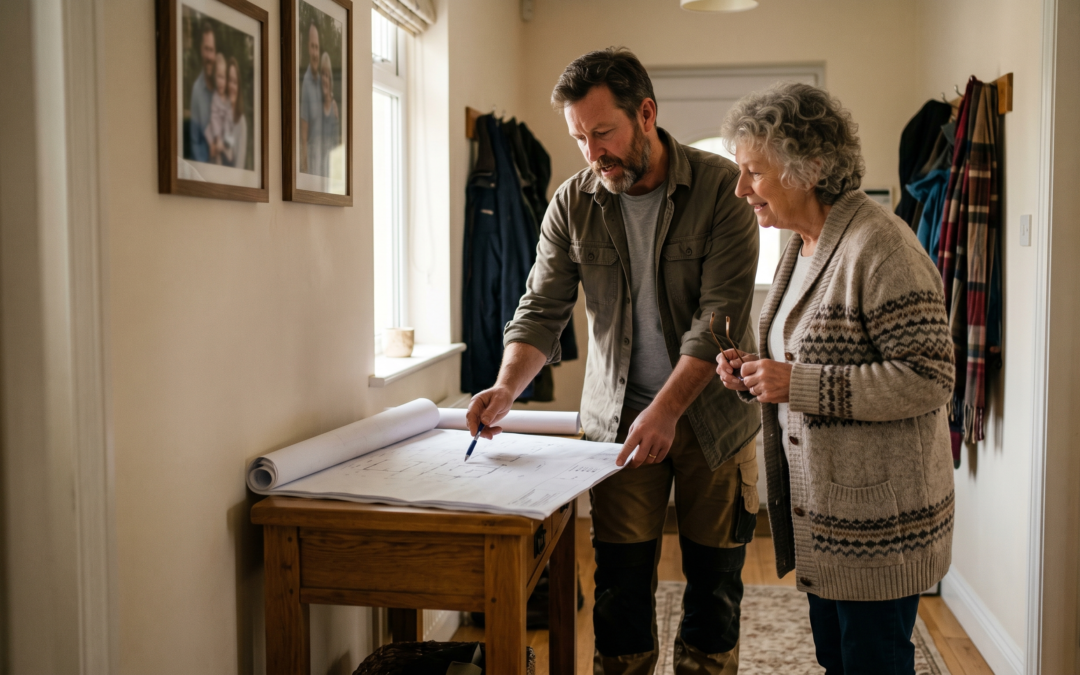
Good reviews. Years of experience. Highly recommended by a neighbor. When I explained what I wanted, a bathroom that would be safer and easier to use for the long term, he nodded and wrote up a quote. He installed the grab bar where I pointed. Solid installation. Wrong placement.
It took talking to a CAPS specialist six months later to understand what I’d missed.
What CAPS stands for
CAPS stands for Certified Aging-in-Place Specialist. It’s a professional certification from the National Association of Home Builders, developed in collaboration with AARP.
Contractors who earn this certification have received specific training in home modifications for older adults and people with physical limitations. They study universal design principles, which is the approach to building and modifying spaces so they work for people across a range of abilities and life stages. They learn which modifications make a real difference, which ones people tend to regret, and how to assess a home systematically rather than just responding to what the homeowner asks for.
A license and experience in home renovation don’t substitute for this training. The knowledge is genuinely different.
What a CAPS specialist does that others don’t
A general contractor responds to what you ask for. A CAPS specialist starts by assessing what you actually need, which isn’t always the same thing.
Before any work begins, they walk through your home with a trained eye. They look at traffic patterns, flooring transitions, lighting levels, door widths, furniture placement, and how the space actually functions. They bring a systematic framework for identifying what poses the highest risk, what modifications would address it, and what should happen first.
Some specific things CAPS training covers:
Grab bar placement. This is more complex than it looks. The right position depends on the person’s height, strength, and which side they favor. Bars in the wrong location don’t get used when they’re needed most.
Flooring transitions. Small height differences between floor surfaces that seem trivial can create significant trip hazards. A trained eye catches them.
Lighting levels. Aging eyes need more light than younger eyes do, and the need increases over time. CAPS specialists assess lighting at the points in the home that matter most: stairs, hallways, and the path between bed and bathroom.
Entry and exit. Getting in and out of the house safely, with consideration for how mobility may change over time, is often overlooked in standard renovation planning.
What the process looks like
A CAPS assessment typically starts with a home visit and a written report. The report describes what they found, what they recommend, and in what priority order.
From there, you decide what to tackle first. Not everything has to happen at once. A good CAPS specialist will be clear about which items address immediate risk and which are longer-term improvements to phase in over time.
They’ll also know what requires a permit and what doesn’t. Grab bars generally don’t. A widened doorway might. Understanding this upfront prevents surprises mid-project.
Cost and coverage
CAPS contractors charge market rates for their work. The assessment itself may be a separate fee or may be folded into the project estimate. Ask before the first visit.
Some modifications may qualify for tax deductions when made for documented medical reasons. Some insurance plans, particularly long-term care policies, may help with modification costs. Neither is guaranteed, and the rules are specific to each situation. Your CAPS specialist may have general guidance, but confirm the details with your insurer or tax advisor.
State and local programs that help fund home modifications for eligible older adults do exist. Availability and eligibility criteria vary considerably by location. Your local Area Agency on Aging is the best starting point for finding out what’s available in your area.
How to find a CAPS specialist near you
The National Association of Home Builders maintains a searchable directory of CAPS-certified contractors at nahb.org. Look under “Find a Builder” and filter by CAPS designation.
Age Safe America maintains their own directory of aging-in-place professionals, including CAPS specialists, at agesafeamerica.com.
If you already work with a contractor you trust, it’s worth asking whether they hold CAPS certification or know someone in their network who does.
Questions worth asking before you commit
CAPS certification requires training, but practical experience with aging-in-place projects matters too.
Before committing to any contractor, I’d ask: How many aging-in-place projects have they completed in the last year? Can they provide references from clients with similar projects? Does their process start with a written home assessment?
That last point is the most important. If a contractor is ready to schedule work before walking through your home and doing a proper assessment, that’s worth noticing.
One piece of the bigger picture
A CAPS specialist handles the physical home. That’s one of five areas I think about for aging in place well. The others, legal documents, health management, community connections, and technology, each deserve the same level of intentional attention.
If you want to see where you stand across all five, the 3-minute assessment gives you a clear picture.
Take the 3-Minute Assessment
The right home modification starts with the right assessment. That’s what a CAPS specialist brings.
Anne

by lynncarnes@gmail.com | May 29, 2026 | Preparedness
Most emergency preparedness advice is written for a 35-year-old with a go-bag.
The advice is: pack a backpack, have a three-day water supply, know your exit routes. Be ready to evacuate fast.
If that’s not your situation, or if the standard framework doesn’t quite fit where you are in life, this is for you.
Emergency preparedness for older adults is a real and different topic. The needs are different. The vulnerabilities are different. The resources available, including neighbors, technology, and community connections, can be different too. Let me walk through it the way I think about it for my own home.
The essential difference
The main thing that makes emergency preparedness different after sixty is this: the standard advice was optimized for people who are healthy, highly mobile, have no special medical needs, and can improvise their way through unexpected situations.
Many older adults are managing medications on a fixed schedule. Some have mobility considerations. Some live alone. Some have conditions that require medical equipment that depends on power.
A plan that doesn’t account for these realities isn’t really a plan for you. It’s a plan for someone else.
The medication situation
This is the biggest practical difference. If you’re on medications that require refrigeration, or that must be taken on a specific schedule, a three-day disruption is not just inconvenient. It can be dangerous.
Your emergency plan needs to include:
A copy of your medication list (not just the bottles, but a paper list you can carry), with doses, prescribing doctors, and pharmacy contact information. I wrote about building this list in detail elsewhere.
A supply of medications that doesn’t run to zero the day before a refill is due. Talk to your doctor about whether a slightly larger emergency supply is possible for your situation. Many insurers allow one-time emergency overrides.
Knowledge of how long your critical medications can go without refrigeration (your pharmacist can tell you) and what an alternative power source looks like if needed.
Room by room
Kitchen: Keep at least three days of non-perishable food and water. The standard recommendation is one gallon of water per person per day. A manual can opener. A battery-powered or hand-crank radio. A flashlight with fresh batteries.
If you use a natural gas stove, know where the shutoff valve is and when to use it. If you use electric, know what you’ll do if power is out for an extended period.
Bedroom: A flashlight within reach of the bed. Shoes or slippers accessible from the bed so you can move safely if you have to get up quickly in the dark. Your phone charging cord nearby. A basic first aid kit.
If you sleep with hearing aids or glasses off, have a consistent place for them near the bed so you can find them without light.
Bathroom: Emergency medications here if this is where you take them. A backup supply of any over-the-counter items you rely on regularly.
Home office or documents area: A go-folder with copies of essential documents: insurance cards, identification, medication list, emergency contacts, and the name and number of your primary doctor. This folder should be something you can grab in a hurry.
Your important legal documents, the will, the healthcare proxy, the advance directive, should have a safe storage location that someone else knows about. These are the documents you need to survive an emergency AND the documents your family would need if you didn’t.
The power situation
Power outages affect older adults differently because of medical equipment and medication storage. A few things to address ahead of time:
If you use any equipment that requires electricity, contact your utility company about their medical baseline or life support program. Many utilities maintain priority restoration lists for customers with power-dependent medical needs.
If you have a portable generator, know how to use it safely before you need to (carbon monoxide from generators used indoors is a real danger). The Red Cross and FEMA have guidance on generator safety that’s worth reading.
Battery backup devices (power banks) for phones are inexpensive and worth having. Know where your phone charger is and that it’s accessible.
The neighbor plan
This is often overlooked in emergency preparedness conversations, but it may be the most important item for older adults.
Who knows you’re home? Who would check on you if the power went out for three days? Who has a key?
Having one or two neighbors who know your situation, who have your number and you have theirs, and who have agreed to check on you in an emergency is a form of preparedness that no amount of supplies can replace.
If this relationship doesn’t exist yet, building it before you need it is both a preparedness investment and a community investment.
The evacuation consideration
Some emergencies require leaving your home. If you have mobility considerations or don’t drive, you need a plan for this before the emergency happens, not during it.
Who would take you? Where would you go? Do you have what you’d need for an extended stay somewhere else, including medications and documents?
The local emergency management office often has registration programs for residents who would need evacuation assistance. These are underused and worth knowing about.
A word about the planning itself
I used to put off emergency preparedness because it felt like a large project. It is, if you try to do it all at once.
The way I finally got it done was to treat it as a series of small tasks: make the medication list this week, put the document folder together next week, check the flashlight batteries the week after that.
The Independence Assessment asks about preparedness as one of its five pillars. If you want a clear picture of where your overall plan stands, that’s a useful starting point.
Take the 3-Minute Assessment
Prepared doesn’t mean ready for everything. It means ready for the most likely things. That’s enough.
Anne
by lynncarnes@gmail.com | May 29, 2026 | Technology
Managing medications sounds like a simple problem. Take the right thing at the right time. Done.
In practice it’s more complicated than that, especially when you’re managing multiple prescriptions on different schedules, with different food restrictions, some taken once daily and others three times, some that can’t be taken together.
The research on medication adherence, taking medications correctly and consistently, shows it’s a significant and widespread problem. And the consequences of getting it wrong can be serious.
Apps designed to help with this exist. They’re not all equally good. Here’s an honest look at what I found.
What I looked for
I was specifically evaluating these through the lens of ease of use for adults over 60, many of whom are not looking for a complex app that does everything. They want something that:
Sends a clear, audible reminder at the right time. Lets you confirm you took the medication. Can be set up without a lengthy technical process. Works on a phone they already have.
Secondary but useful: generates a medication list they can share with a doctor. Tracks what was taken. Has the option to add a caregiver who can see the log.
Medisafe
Medisafe is consistently rated as one of the most usable medication apps available. The setup walks you through adding medications step by step, with a database of common medications so you don’t have to type everything manually. Reminders are loud and clear. The interface doesn’t require digging through menus.
One feature worth knowing: Medisafe includes an “interaction checker” that will flag if two medications you’ve entered together are known to interact. This is not a replacement for a pharmacist, but it’s a useful second check.
It has a paid tier with additional features, but the free version covers the core functionality most people need.
Good for: people who want something straightforward with solid reminders and a useful drug interaction alert.
CareZone
CareZone has been popular with families managing medications for older relatives because it’s designed explicitly for caregiving situations. You can add a family member’s profile and manage their medications remotely.
It also includes health tracking (blood pressure, blood sugar, weight), a journal for notes, and document storage for things like insurance cards. It’s more comprehensive than Medisafe, which means it’s also a bit more to set up.
The tradeoff is complexity: more features means more to navigate, and some users find it more than they need.
Good for: situations where a caregiver or family member will be helping manage medications, or where multiple health metrics need tracking in one place.
The Apple Health and Google Health apps
Both iPhone and Android come with built-in health apps that have basic medication tracking and reminder features. They’re less full-featured than dedicated apps but have the advantage of already being on the phone most people carry.
If the idea of downloading and learning a new app is a barrier, the built-in health app may be the right starting point. The reminder functionality is basic but functional.
A note about what apps can’t do
Medication apps are reminders and trackers. They are not substitutes for pharmacist or physician guidance on medication management.
If you’re managing complex medications, have experienced side effects, or aren’t sure about interactions, that conversation belongs with your pharmacist or doctor. Many pharmacies offer free medication reviews. This is underused and genuinely valuable.
An app can help you remember to take something. It can’t tell you whether you should be taking it, at what dose, or whether it’s working correctly for you.
The paper backup
Whatever app you use, I still recommend maintaining a paper medication list that can be found and read by emergency responders who don’t have access to your phone.
I wrote about what goes on that list separately. The app and the paper list serve different purposes. The app is daily. The paper list is for emergencies.
Where technology fits in the bigger picture
Medication management apps are one small part of how technology can support independence at home. The technology pillar of the Independence Plan covers a range of tools, from medical alert systems to telehealth to smart home devices, that help people stay in their homes longer.
If you want to understand where you stand across all five areas of independent living, the 3-minute assessment is the place to start.
Take the 3-Minute Assessment
The right app is the one you’ll actually use. Start simple. Build from there.
Anne
by lynncarnes@gmail.com | May 29, 2026 | Community
In 2002, a small group of neighbors in Beacon Hill, Boston, had a problem and a theory.
The problem: they wanted to age in their homes, but the existing options for support, assisted living, senior services, formal care, didn’t fit what they wanted. Too institutional. Too much loss of control. Too expensive.
The theory: if neighbors helped each other, if they organized the kind of informal support that used to happen naturally in communities but had eroded in modern suburban life, they could create something that worked.
They called it a Village. And it worked well enough that hundreds of others built the same thing.
What a Village actually is
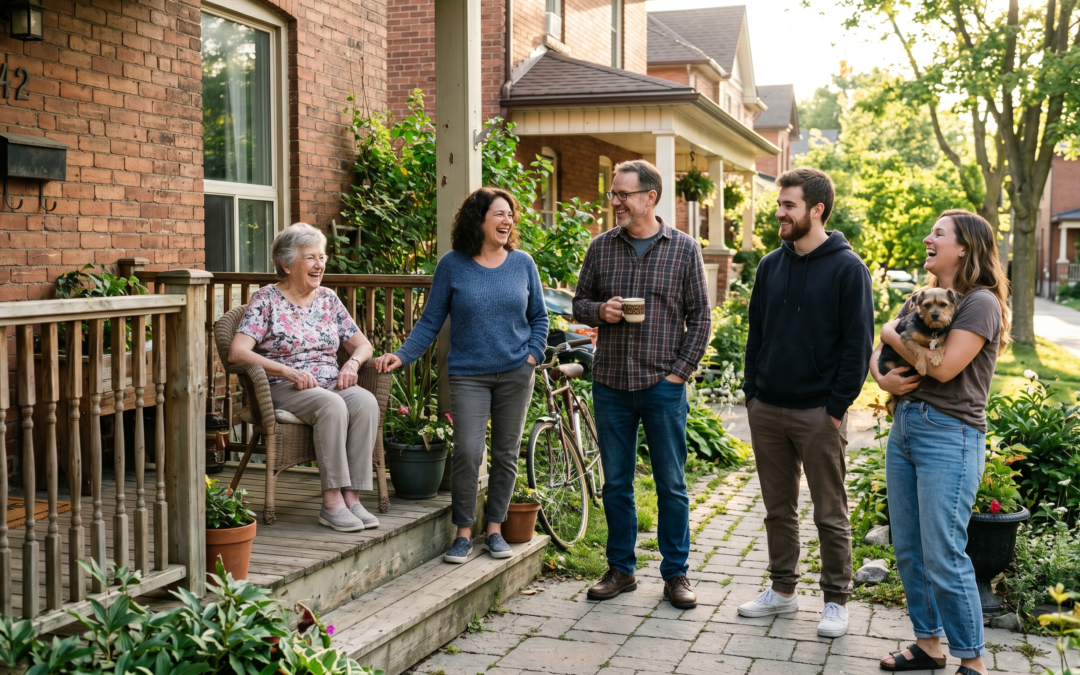
A Village is a neighborhood-based membership organization where older adults who want to age in place exchange help with each other and with community volunteers.
The basic structure is simple. Members pay a modest annual fee. In exchange, they can call the Village for a range of services: a ride to a medical appointment, help with a technology problem, a referral to a vetted local contractor, someone to walk through the house after a storm, friendly check-in calls.
Villages vary enormously in what they offer. Some have professional staff. Many are all-volunteer. Some are formal nonprofits. Some are informal neighborhood networks. What they share is the organizing principle: aging in place is a community project, not just an individual one.
Why this model works
The Village model addresses something the traditional aging services model largely ignores: the gap between independent and needing professional care.
Most people don’t need a nurse or a physical therapist every day. They need a ride. They need someone to change a lightbulb they can’t safely reach. They need a recommendation for a plumber they can trust. They need someone to notice if they haven’t been seen in a few days.
These are the things neighbors and community members can do for each other. But in the fragmented social landscape most of us live in, those connections don’t form naturally anymore. A Village creates the structure that makes them happen.
For members, the benefit is practical: access to help that’s reliable, vetted, and affordable. But the research on Villages also shows something more significant: members report lower rates of social isolation and higher sense of wellbeing than comparable older adults outside the model. The connection itself is part of the value.
Who Villages are for
Villages tend to attract people in their sixties and seventies who are healthy and independent now and want to stay that way. They join before they need a lot of help, because the time to build community infrastructure is before you need it.
If you’re looking for intensive care management or professional health services, a Village is not that. It’s community. The services are supplemental and social, not medical.
But for people who want to remain in their own homes, who want to know their neighbors, who want a reliable network of support that doesn’t require moving to a facility, Villages are exactly what the model was designed for.
How to find out if there’s one near you
The Village to Village Network is the national organization that supports the model and maintains a directory of Villages across the country. Their website has a search function by zip code.
Not every area has a Village. Some are in development. And some communities that don’t have a formal Village have informal versions, neighborhood groups, faith community networks, or other local structures that serve similar functions.
If there’s nothing near you, the Village to Village Network also provides resources for people who want to start one. It’s been done in communities ranging from dense urban neighborhoods to small towns.
If there’s no Village near you
The absence of a formal Village doesn’t mean the principle doesn’t apply.
The core idea, that aging well requires genuine community, that the connections you build now determine what support you have later, is true regardless of whether there’s an organization facilitating it.
I wrote about building your own support network separately. The practical question is the same: who are the people in your life who know you, who you could call, who would notice? Building that, intentionally, before you need it, is the Village idea applied at the individual level.
Take the 3-Minute Assessment
The neighborhood you already live in might be more of a resource than you’ve built it to be.
Anne
