
We have gotten independence wrong.
We treat it like a solo sport. The person who needs no one. Who does it all herself. Who would rather struggle than ask. We hand each other that picture like it is something to be proud of, and then we are surprised when it leaves people stranded in their own homes with nobody to call.
I believed that picture for most of my life. I want to tell you what it cost me to find out it was backwards.
The frame we were handed
For a long time, the proudest thing I could say about myself was that I did not need help. I had a husband, children, neighbors I waved at, a couple of old friends I saw a few times a year. I would have told you I had a full life and a strong one. I would have told you I was independent.
What I had was a contact list. That is not the same thing as a village, and I did not learn the difference until I needed the village, reached for it, and found it was not really there.
The night I learned the difference
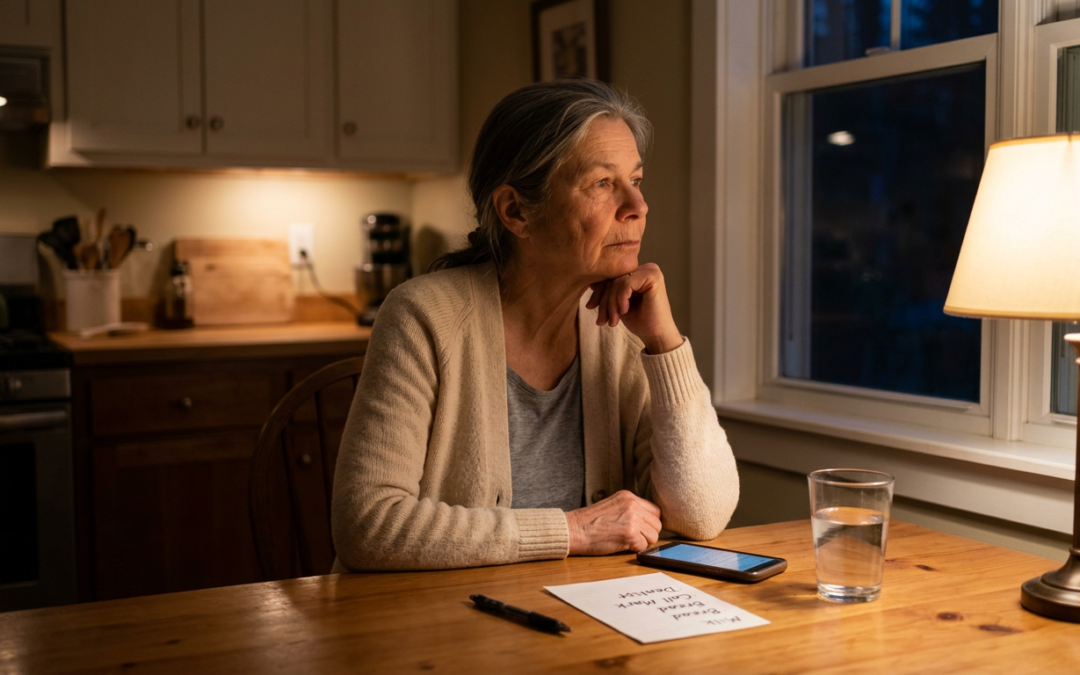
When something hard happened in my family, the kind of thing that does not keep office hours, I sat down one night and tried to make a list of the people I could actually call. Not people I knew. People I could call at nine o’clock on a Tuesday, and they would come, or at least pick up and stay on the line.
The list was short. Embarrassingly short, for a woman who knew a lot of people.
It was not short because I was unlikable or because nobody cared. It was short because I had let almost every one of those relationships go quiet. I had been busy. I had assumed they would be there because they always had been. I had treated my friendships like a fixed asset instead of a thing that needs tending, and they had quietly depreciated while I was not looking, the same way muscle does, the same way a house does.
What independence actually is
Here is the reframe that changed everything for me.
The most independent people I know are not the most alone. They are the most connected. It is not a coincidence and it is not a contradiction. It is the entire point.
Independence is not the absence of needing people. That version is a fantasy, and a fragile one, because it is one bad night away from collapse no matter how organized your paperwork is or how strong your legs are. The strongest, most prepared person I know is still one fall, one diagnosis, one loss away from losing her independence completely if there is no one to call when it happens.
Real independence is having built the relationships that let you stay in your own life when something goes wrong. The village is not the opposite of independence. The village is the thing that makes independence survivable. It is infrastructure, the same as the folder of documents, the same as the grab bar in the shower. You do not see it until the day it is the only thing holding you up.
Why this changes everything
Once you see it that way, connection stops being the soft, social, optional item, the thing you will get to when you have time. It becomes part of the plan. It moves onto the same list as the will and the handrail, because it does the same job. It keeps you in your home and your life when the thing you did not plan for arrives.
That is why I put Community next to Preparedness and Strength, and not off in some lighter lifestyle category. It is not lighter than those. On the worst days it is the heaviest one.
What this is not
I want to be clear, because the old frame is stubborn.
This is not about being a social butterfly. It is not about a big network, or a full calendar, or being the kind of person who is good at parties. I am not that person, and I am not asking you to become her.
It is about a small number of real relationships that you actually keep up. Five people who would come is worth more than two hundred you wave at. Reciprocity matters more than reach. The goal is not to be popular. The goal is that the list of people you could call at nine on a Tuesday is not as short as mine was.
Where to start
The first step is the reframe itself. You have to stop seeing connection as the optional social thing and start seeing it as part of staying independent. Nothing useful happens until that flips.
Then do the small, slightly uncomfortable thing. Make the list. Honestly. Who would actually come. Do not flinch from how short it is, if it is short. Mine was short, and I am still here, and I have spent the years since making it less short on purpose.
Then pick one person you have let go quiet, someone who would not find it strange to hear from you, and reach out this week. Not for anything. Just to start tending the thing again. That is the whole first move. One message. You are not building the entire village this week. You are remembering that it has to be built on purpose, and beginning.
I am putting together a simple worksheet for thinking through your own village, who is in it, who could be, where the gaps are. When it is ready I will send it to my newsletter. If you are not on the list, you can sign up at the bottom of any page on this site.
And if you want to see where community sits next to the other parts of staying independent, the Independence Assessment scores you across all five pillars in three minutes and tells you which one needs you first.
You do not have to build a village this week. You just have to stop believing you are supposed to do this alone. That part you can change right now.
I’m glad you’re here.
Anne