
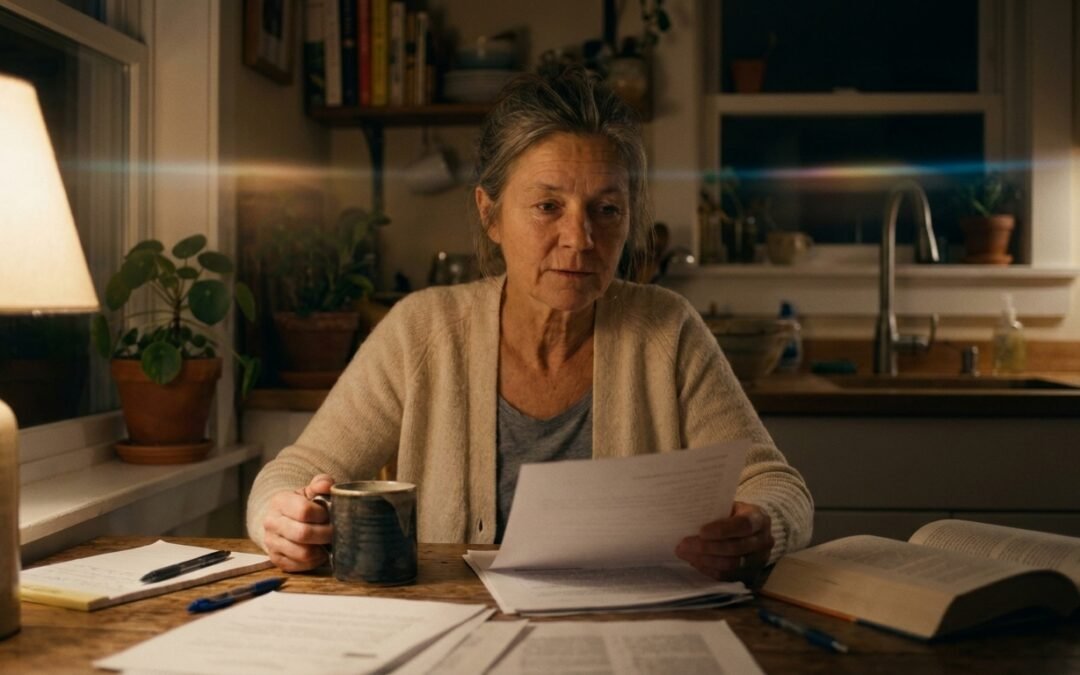
This is the article I wish existed three years ago, before someone I loved faced a crisis their family wasn’t prepared for.
That someone was me. The crisis was my husband’s two-month hospital stay. And the family that wasn’t prepared was mine.
If you’ve ever told yourself you’ll get to the wills, the directives, the paperwork, the lists, the conversations, “after the holidays” or “when things settle down,” I was you. I had been you for about a decade.
What follows is the part of the story I don’t tell at dinner parties. I’m telling it here because I think you might be where I was, and I’d like to spare you what came next.
The night I realized I had pieces of a plan, not a plan
The night my husband was admitted to the hospital, I went home and tried to find his healthcare directive.
I knew we had one. We’d done the paperwork years before, paid a lawyer, signed in three places, felt very responsible about ourselves for a couple of weeks. Then I put the documents in a folder labeled Important and forgot about them.
That night, I spent an hour going through what I’d been calling my Important Documents folder. It turned out to be three folders. All of them were out of date. I found his old passport. I found a tax return from 2014. I found a Christmas card from a friend who’d been dead for four years. I did not find the directive.
I gave up around midnight and tried to remember the name of the lawyer who’d drawn it up. I couldn’t. I called my sister at one in the morning, less because I thought she could help and more because I needed to say out loud what was happening.
If you’d asked me that morning whether I was prepared, I would have said yes. I had wills. I had insurance. I had a mental list of what we’d need if anything ever happened.
What I had was a vague mental list. Not a plan.
The gap between thinking you’re prepared and being prepared only shows up at the exact moment you can’t afford it.
Why we put this off
I want to spend a minute here because if you’re still reading, you’re probably not unaware that you should be doing this. You’re just not doing it. I want to talk about why.
For me, it was three things at once.
The first was that planning for hard things felt morbid. Like I was inviting them in by acknowledging they were possible. I told myself I was being optimistic when really I was being superstitious.
The second was that the work felt overwhelming. Wills, healthcare proxies, financial powers of attorney, advance directives, beneficiary updates, password lists, medication lists, contact lists, home modifications, insurance reviews, conversations with kids who didn’t want to have them. I didn’t know where to start, so I didn’t start.
The third was that I told myself I was too busy. Holidays, work, family, the dog, the garden, the bathroom that needed re-grouting. There was always something more pressing. There always is. That’s how decades pass.
I don’t know which one of those three is yours. Maybe it’s all three. What I want to say is that none of them are bad reasons. They’re just not good enough.
The reframe that changed how I think about all of this
Somewhere in the second month of the hospital, sitting in a chair next to my husband while he slept, I had a thought that’s stayed with me.
Planning for what comes next is not morbid. It is the most loving thing you can do for the people who’ll have to make decisions for you.
The night I couldn’t find that directive, my daughter was on a plane home and the social worker was asking me questions I didn’t have answers to. My husband couldn’t speak for himself. I was guessing. I was guessing about a man I’d been married to for thirty-seven years.
That’s what we’re doing when we don’t plan. We’re handing the worst night of someone’s life to a person we love and saying, here, you figure it out, while you’re scared.
It’s not that planning is depressing. Not planning is depressing.
Once I saw it that way, I couldn’t unsee it.
What planning actually looks like
The other reason I waited so long was that I thought planning meant signing a thousand documents and having a series of awful conversations all at once. It doesn’t.
Over the months that followed, I started organizing my own life into five buckets. I didn’t invent them. I borrowed them from people who’d thought about this longer than I had. They became what I now call the five pillars.
Preparedness. The paperwork nobody wants to do. Wills, directives, powers of attorney, medication lists, the contact sheet. The folder I should have had ready.
At Home. The space you live in, and whether it’s set up to keep working as you age. Lighting, safety, bathroom modifications. The small changes that mean you don’t have to move when life gets harder.
Strength. Balance, mobility, and the daily habits that keep you in your own home past 70. Not gyms or marathons. The ability to stand up from a couch without using your hands.
Community. The village most of us have to build on purpose. Friends, neighbors, the people who would show up.
Technology. Tools that quietly make life easier without taking it over.
I want to tell you something honest. I’m not done with any of these. I’m probably never going to be done. But each one of them looks different now than it did three years ago, and the difference is the difference between hoping and planning.
If you only do one thing this week
If everything I’ve said feels like too much, I want to give you the smallest version.
Take twenty minutes. Get a paper folder. Put five things in it. Your will. Your healthcare directive. Your insurance information. A current list of the medications you take. A contact list of the people who’d need to be called.
Then tell two members of your family where the folder is.
That’s it. That’s not a plan. But it’s the difference between someone you love spending an hour searching the night something happens, and not having to.
You don’t need a lawyer to do this. You don’t need anyone’s permission. You don’t need to think about it any longer than it takes you to read this sentence.
An invitation
If you want to see where you stand across all five pillars, the Independence Assessment will tell you. It takes about three minutes. Twenty questions, scored out of a hundred, with a personalized starting point at the end.
You’ll see your strongest pillar, your weakest, and one specific thing to do this week.
I built it because I wanted to give people what I wish I’d had three years ago: a way to know where they stood, in plain language, without making them feel like they were doing something morbid.
If you take it, I think you’ll see what I mean.
Whatever you do, do something. Not because anything bad is going to happen tomorrow. Just because if it does, the people you love deserve more than you guessing.
I’m glad you’re here. I’ll see you next week.
Anne