
There’s a particular kind of helplessness that comes with watching a parent slow down.
You see things they might not. The fridge that’s less full than it used to be. The way they push themselves up from a chair now. The walk that’s gotten shorter, or stopped.
You want to do something. But every time you try, you either get “I’m fine” or a conversation that ends in hurt feelings. The gap between caring and helping can feel very wide.
This article is about that gap, and how to work in it.
What your parent is protecting
Before thinking about tactics, it’s worth understanding what physical independence means to most older adults.
It’s not just the ability to do things. It’s the sense of self that comes with it. Many people have spent their whole lives being competent, capable, and in charge of their own bodies. Slowing down is a loss. Accepting help with it is a more complicated loss.
When you express concern about a parent’s physical health, what they often hear, even when it isn’t what you mean, is: you’re not doing well. You’re declining. You need me to manage this for you.
The support that works tends to be the support that reinforces their agency rather than substituting for it.
What actually helps
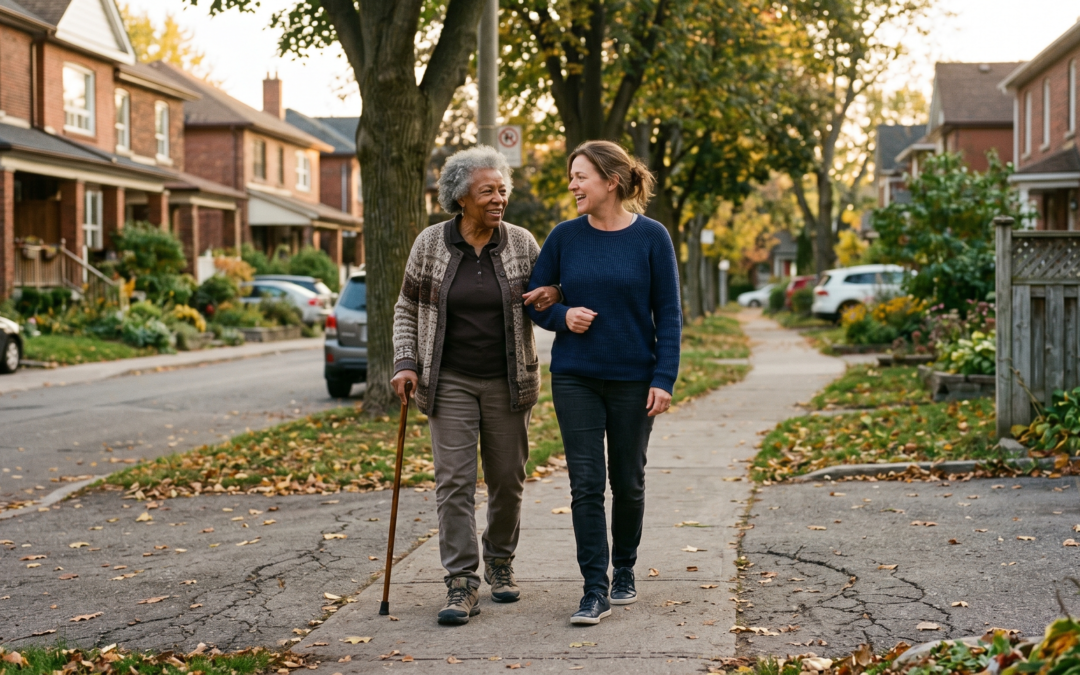
Doing alongside, not doing for. There’s a meaningful difference between “I’ll take you to the gym” and “I’ve been wanting to find a place to walk regularly. Would you want to join me?” The first positions you as the solution to their problem. The second positions you as someone doing the same thing they might want to do.
This is not a manipulation tactic. It’s an honest framing that creates a collaborative dynamic rather than a prescriptive one.
Finding something they actually enjoy. Not all movement is the same. A parent who spent their career on their feet may find structured exercise boring. A former dancer might respond to something rhythmic. A nature person wants to be outside. Exercise that fits a person’s history and preferences has a much better chance of continuing than exercise that feels like medicine.
Ask what they used to enjoy. “Were you ever active in a particular way? Is there anything like that you’d want to try again?” is a better starting place than “you should really be doing something for your strength.”
Connecting it to something they care about. Strength and mobility are means to ends. If your parent loves their garden, the argument for physical activity is “this helps you keep doing the garden.” If they want to be at a grandchild’s events, “staying strong keeps you mobile enough to be there” is the conversation.
Abstract health arguments rarely move people. Concrete life arguments often do.
Removing friction, not adding pressure. If getting to a class is a logistics problem, solving the logistics without attaching it to a conversation about their health is a genuine gift. “I’m going past the Y anyway, want me to bring you?” is different from “you really should be going to the Y.”
The harder cases
Some parents are resistant in ways that go beyond the normal reluctance. They minimize clear problems. They refuse to see doctors. They dismiss concerns with a firmness that shuts the conversation down entirely.
A few things that still apply:
You cannot make another adult take care of themselves. This is a real limit, and accepting it is part of being in this role.
You can keep the door open without forcing it. “I know you don’t want to talk about this, but I want you to know I’m here when you do” is worth saying and worth meaning.
A doctor’s recommendation carries different weight than a family member’s. If you can get a conversation happening with their physician, that changes the dynamic in ways that a conversation from you often can’t.
And in some cases, waiting for a moment of natural motivation, after a friend has a fall, after a TV segment catches their attention, is more effective than sustained pressure. The moment of receptivity matters.
The balance
The goal here is not to become your parent’s health manager. It’s to stay in genuine relationship with them while making it easy for them to stay healthy if they want to.
The distinction matters. One of those is a role that erodes the relationship over time. The other is just being a thoughtful family member.
If you’ve been finding the physical health conversations difficult, the same principles that work for broader aging conversations apply here. Lead with curiosity. Ask before you advise. Be alongside, not in front.
If this resonated and you think someone you know could use it, share it their way.
The people who stay most active tend to have people around them who make it easy and enjoyable. You can be that person.
Anne