
One of the things that surprised me when I started researching aging in place was how much help is available locally, and how hard it is to find.
It’s not that the resources don’t exist. They do, in most parts of the country. What’s missing is a clear map to them.
This is that map, or at least the starting point for drawing one.
Start with the Area Agency on Aging
Every region of the United States has an Area Agency on Aging. These are local organizations funded through the federal Older Americans Act, and they coordinate services for older adults in their communities. What they offer varies because local needs and local funding vary, but they are as close to a one-stop resource as anything I’ve found.
The simplest way to find yours is the Eldercare Locator, a free federal service at eldercare.acl.gov or by phone at 1-800-677-1116. Enter your zip code, and it connects you to your local Area Agency on Aging.
Through your Area Agency on Aging, you may be able to find or access: transportation assistance, in-home help, meal programs, caregiver support, legal assistance, health insurance counseling, and more. Not every program is available in every area, but starting here tells you what is.
Meals on Wheels
If getting regular nutritious meals at home has become harder, Meals on Wheels is worth knowing about. The program is more widespread than most people realize, and it’s not just food. The volunteers who deliver meals often serve as a daily wellness check for people living alone. That human contact, brief as it is, is part of the value.
You can find the program nearest to you at mealsonwheelsamerica.org.
Transportation
Transportation is one of the practical barriers that most directly affects independence, particularly for people who have stopped driving or who drive only occasionally.
Most urban and suburban areas have paratransit programs: door-to-door transportation for people with disabilities or mobility limitations. These are usually subsidized and significantly less expensive than taxis or rideshare services. Some are specifically for medical appointments. Others are general-purpose.
Some Area Agencies on Aging run their own transportation programs or have contracts with local services. Faith communities often organize ride networks for members. Some senior centers have shuttle services.
Your local Area Agency on Aging is the right starting point for understanding what transportation options exist in your specific area.
Senior centers
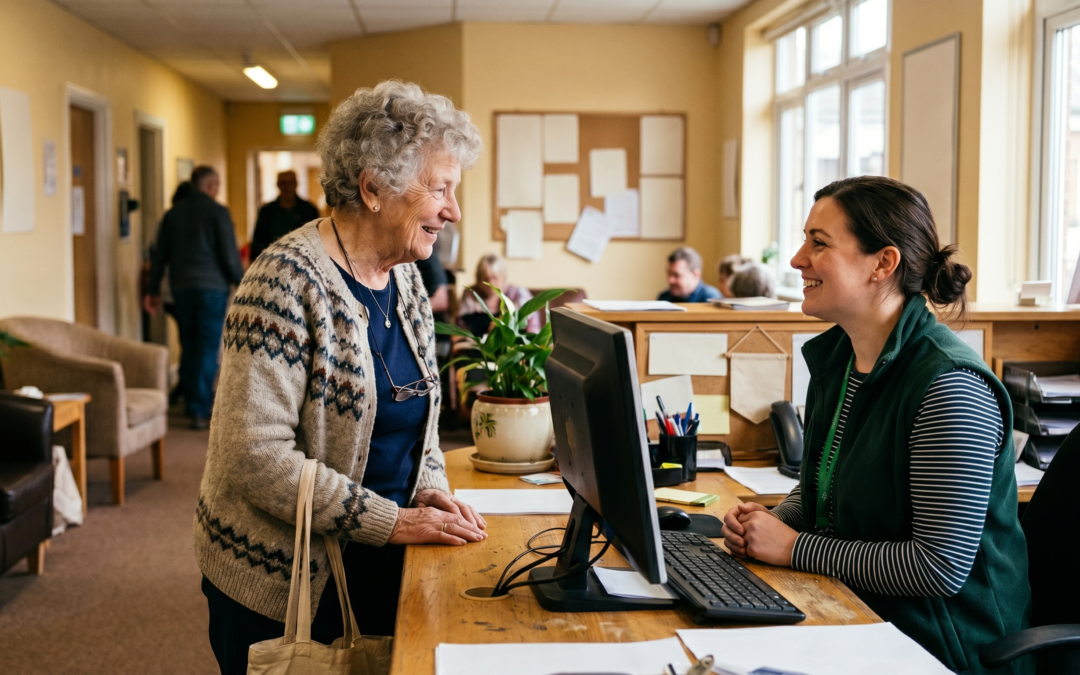
Senior centers have changed considerably in recent years. Many are no longer primarily social clubs. They offer fitness programs, health screenings, educational workshops, legal clinics, and technology assistance. Some run programs that would be expensive to access privately.
If you dismissed your local senior center years ago and haven’t revisited that impression, it may be worth a second look. Call and ask what they currently offer. The range is often surprising.
Public libraries
Libraries are a resource that aging-in-place planning rarely mentions, but they offer more than most people use.
Many library systems now offer digital literacy programs specifically designed for older adults: help with smartphones, tablets, video calling, and navigating the internet. These are free, often led by trained staff or volunteers, and specifically designed for people who are newer to technology.
Libraries also offer meeting spaces, notary services, and access to research databases. If you’re trying to understand your legal options, research local services, or learn about a health topic, a library reference librarian can often help you find a starting point.
Faith community networks
Faith communities, churches, synagogues, mosques, and other congregations, often have informal or formal programs to support members who are aging in place. Volunteer networks, friendly visitor programs, meal support, and transportation help are common.
Even if you’re not an active member of a particular congregation, many extend these services more broadly to neighbors and community members. If you have a relationship with a local faith community, it’s worth asking what they offer.
Home repair and modification programs
Some programs help older adults with home safety modifications at low or no cost. These are often run through Area Agencies on Aging, local nonprofits, or housing authorities.
They may fund grab bar installation, ramp construction, lighting improvements, or other safety modifications for eligible households. Availability and eligibility criteria vary significantly by location and current funding.
Your Area Agency on Aging can tell you what programs exist in your area and how to apply.
Building your personal resource list
The most useful version of this information isn’t a list you read once. It’s a short document you put together for your specific situation.
The name and phone number for your local Area Agency on Aging. The Eldercare Locator number (1-800-677-1116). The senior center nearest you. The transportation option that serves your area. The faith community or neighborhood group with a support network.
Build that list now, when you don’t need most of it. Because when you do need it, having it already assembled makes everything simpler.
The resources exist. The work is finding them once so they’re there when you need them.
Anne