
When I first started thinking seriously about modifying my home, I did what most people do.
I called a general contractor.
Good reviews. Years of experience. Highly recommended by a neighbor. When I explained what I wanted, a bathroom that would be safer and easier to use for the long term, he nodded and wrote up a quote. He installed the grab bar where I pointed. Solid installation. Wrong placement.
It took talking to a CAPS specialist six months later to understand what I’d missed.
What CAPS stands for
CAPS stands for Certified Aging-in-Place Specialist. It’s a professional certification from the National Association of Home Builders, developed in collaboration with AARP.
Contractors who earn this certification have received specific training in home modifications for older adults and people with physical limitations. They study universal design principles, which is the approach to building and modifying spaces so they work for people across a range of abilities and life stages. They learn which modifications make a real difference, which ones people tend to regret, and how to assess a home systematically rather than just responding to what the homeowner asks for.
A license and experience in home renovation don’t substitute for this training. The knowledge is genuinely different.
What a CAPS specialist does that others don’t
A general contractor responds to what you ask for. A CAPS specialist starts by assessing what you actually need, which isn’t always the same thing.
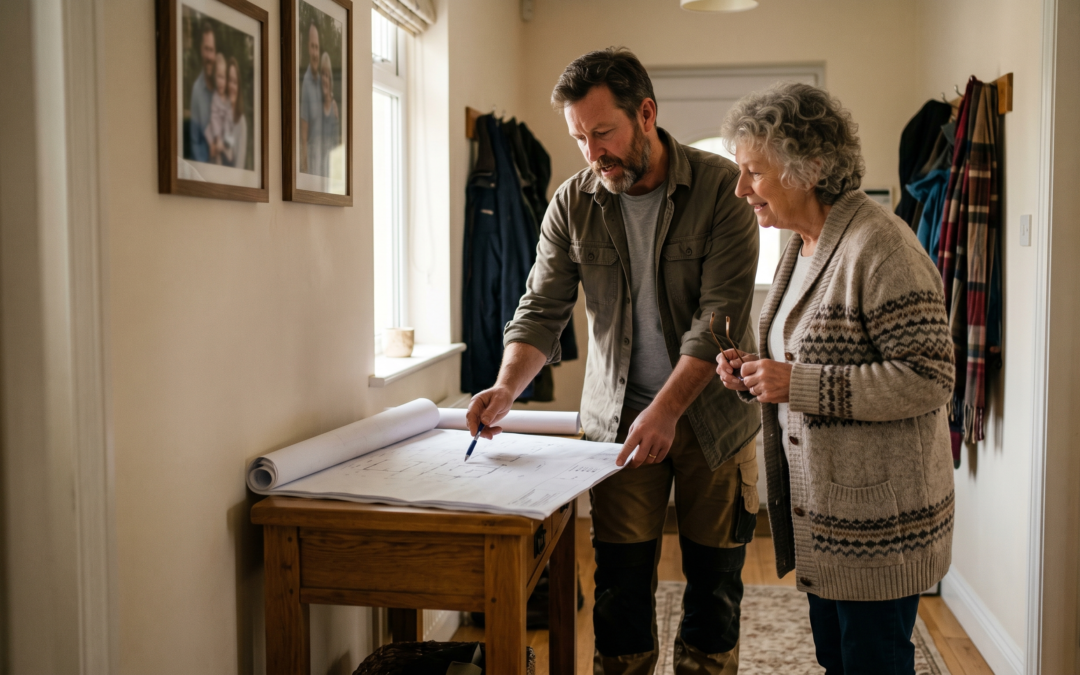
Before any work begins, they walk through your home with a trained eye. They look at traffic patterns, flooring transitions, lighting levels, door widths, furniture placement, and how the space actually functions. They bring a systematic framework for identifying what poses the highest risk, what modifications would address it, and what should happen first.
Some specific things CAPS training covers:
Grab bar placement. This is more complex than it looks. The right position depends on the person’s height, strength, and which side they favor. Bars in the wrong location don’t get used when they’re needed most.
Flooring transitions. Small height differences between floor surfaces that seem trivial can create significant trip hazards. A trained eye catches them.
Lighting levels. Aging eyes need more light than younger eyes do, and the need increases over time. CAPS specialists assess lighting at the points in the home that matter most: stairs, hallways, and the path between bed and bathroom.
Entry and exit. Getting in and out of the house safely, with consideration for how mobility may change over time, is often overlooked in standard renovation planning.
What the process looks like
A CAPS assessment typically starts with a home visit and a written report. The report describes what they found, what they recommend, and in what priority order.
From there, you decide what to tackle first. Not everything has to happen at once. A good CAPS specialist will be clear about which items address immediate risk and which are longer-term improvements to phase in over time.
They’ll also know what requires a permit and what doesn’t. Grab bars generally don’t. A widened doorway might. Understanding this upfront prevents surprises mid-project.
Cost and coverage
CAPS contractors charge market rates for their work. The assessment itself may be a separate fee or may be folded into the project estimate. Ask before the first visit.
Some modifications may qualify for tax deductions when made for documented medical reasons. Some insurance plans, particularly long-term care policies, may help with modification costs. Neither is guaranteed, and the rules are specific to each situation. Your CAPS specialist may have general guidance, but confirm the details with your insurer or tax advisor.
State and local programs that help fund home modifications for eligible older adults do exist. Availability and eligibility criteria vary considerably by location. Your local Area Agency on Aging is the best starting point for finding out what’s available in your area.
How to find a CAPS specialist near you
The National Association of Home Builders maintains a searchable directory of CAPS-certified contractors at nahb.org. Look under “Find a Builder” and filter by CAPS designation.
Age Safe America maintains their own directory of aging-in-place professionals, including CAPS specialists, at agesafeamerica.com.
If you already work with a contractor you trust, it’s worth asking whether they hold CAPS certification or know someone in their network who does.
Questions worth asking before you commit
CAPS certification requires training, but practical experience with aging-in-place projects matters too.
Before committing to any contractor, I’d ask: How many aging-in-place projects have they completed in the last year? Can they provide references from clients with similar projects? Does their process start with a written home assessment?
That last point is the most important. If a contractor is ready to schedule work before walking through your home and doing a proper assessment, that’s worth noticing.
One piece of the bigger picture
A CAPS specialist handles the physical home. That’s one of five areas I think about for aging in place well. The others, legal documents, health management, community connections, and technology, each deserve the same level of intentional attention.
If you want to see where you stand across all five, the 3-minute assessment gives you a clear picture.
The right home modification starts with the right assessment. That’s what a CAPS specialist brings.
Anne