
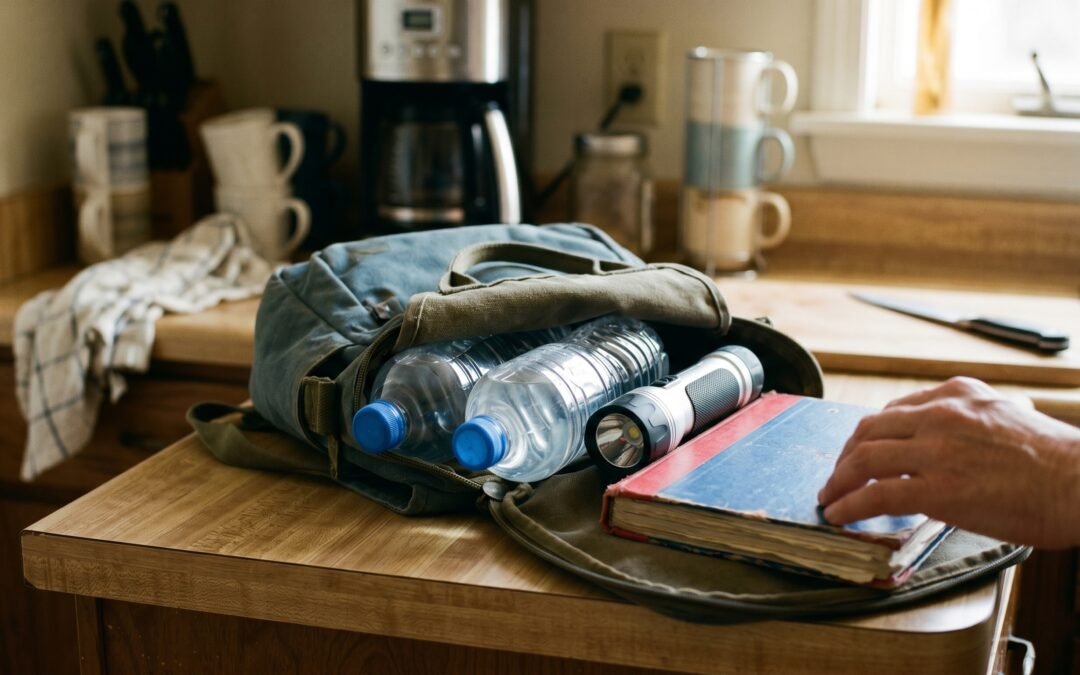
Most emergency preparedness advice is written for a 35-year-old with a go-bag.
The advice is: pack a backpack, have a three-day water supply, know your exit routes. Be ready to evacuate fast.
If that’s not your situation, or if the standard framework doesn’t quite fit where you are in life, this is for you.
Emergency preparedness for older adults is a real and different topic. The needs are different. The vulnerabilities are different. The resources available, including neighbors, technology, and community connections, can be different too. Let me walk through it the way I think about it for my own home.
The essential difference
The main thing that makes emergency preparedness different after sixty is this: the standard advice was optimized for people who are healthy, highly mobile, have no special medical needs, and can improvise their way through unexpected situations.
Many older adults are managing medications on a fixed schedule. Some have mobility considerations. Some live alone. Some have conditions that require medical equipment that depends on power.
A plan that doesn’t account for these realities isn’t really a plan for you. It’s a plan for someone else.
The medication situation
This is the biggest practical difference. If you’re on medications that require refrigeration, or that must be taken on a specific schedule, a three-day disruption is not just inconvenient. It can be dangerous.
Your emergency plan needs to include:
A copy of your medication list (not just the bottles, but a paper list you can carry), with doses, prescribing doctors, and pharmacy contact information. I wrote about building this list in detail elsewhere.
A supply of medications that doesn’t run to zero the day before a refill is due. Talk to your doctor about whether a slightly larger emergency supply is possible for your situation. Many insurers allow one-time emergency overrides.
Knowledge of how long your critical medications can go without refrigeration (your pharmacist can tell you) and what an alternative power source looks like if needed.
Room by room
Kitchen: Keep at least three days of non-perishable food and water. The standard recommendation is one gallon of water per person per day. A manual can opener. A battery-powered or hand-crank radio. A flashlight with fresh batteries.
If you use a natural gas stove, know where the shutoff valve is and when to use it. If you use electric, know what you’ll do if power is out for an extended period.
Bedroom: A flashlight within reach of the bed. Shoes or slippers accessible from the bed so you can move safely if you have to get up quickly in the dark. Your phone charging cord nearby. A basic first aid kit.
If you sleep with hearing aids or glasses off, have a consistent place for them near the bed so you can find them without light.
Bathroom: Emergency medications here if this is where you take them. A backup supply of any over-the-counter items you rely on regularly.
Home office or documents area: A go-folder with copies of essential documents: insurance cards, identification, medication list, emergency contacts, and the name and number of your primary doctor. This folder should be something you can grab in a hurry.
Your important legal documents, the will, the healthcare proxy, the advance directive, should have a safe storage location that someone else knows about. These are the documents you need to survive an emergency AND the documents your family would need if you didn’t.
The power situation
Power outages affect older adults differently because of medical equipment and medication storage. A few things to address ahead of time:
If you use any equipment that requires electricity, contact your utility company about their medical baseline or life support program. Many utilities maintain priority restoration lists for customers with power-dependent medical needs.
If you have a portable generator, know how to use it safely before you need to (carbon monoxide from generators used indoors is a real danger). The Red Cross and FEMA have guidance on generator safety that’s worth reading.
Battery backup devices (power banks) for phones are inexpensive and worth having. Know where your phone charger is and that it’s accessible.
The neighbor plan
This is often overlooked in emergency preparedness conversations, but it may be the most important item for older adults.
Who knows you’re home? Who would check on you if the power went out for three days? Who has a key?
Having one or two neighbors who know your situation, who have your number and you have theirs, and who have agreed to check on you in an emergency is a form of preparedness that no amount of supplies can replace.
If this relationship doesn’t exist yet, building it before you need it is both a preparedness investment and a community investment.
The evacuation consideration
Some emergencies require leaving your home. If you have mobility considerations or don’t drive, you need a plan for this before the emergency happens, not during it.
Who would take you? Where would you go? Do you have what you’d need for an extended stay somewhere else, including medications and documents?
The local emergency management office often has registration programs for residents who would need evacuation assistance. These are underused and worth knowing about.
A word about the planning itself
I used to put off emergency preparedness because it felt like a large project. It is, if you try to do it all at once.
The way I finally got it done was to treat it as a series of small tasks: make the medication list this week, put the document folder together next week, check the flashlight batteries the week after that.
The Independence Assessment asks about preparedness as one of its five pillars. If you want a clear picture of where your overall plan stands, that’s a useful starting point.
Prepared doesn’t mean ready for everything. It means ready for the most likely things. That’s enough.
Anne