
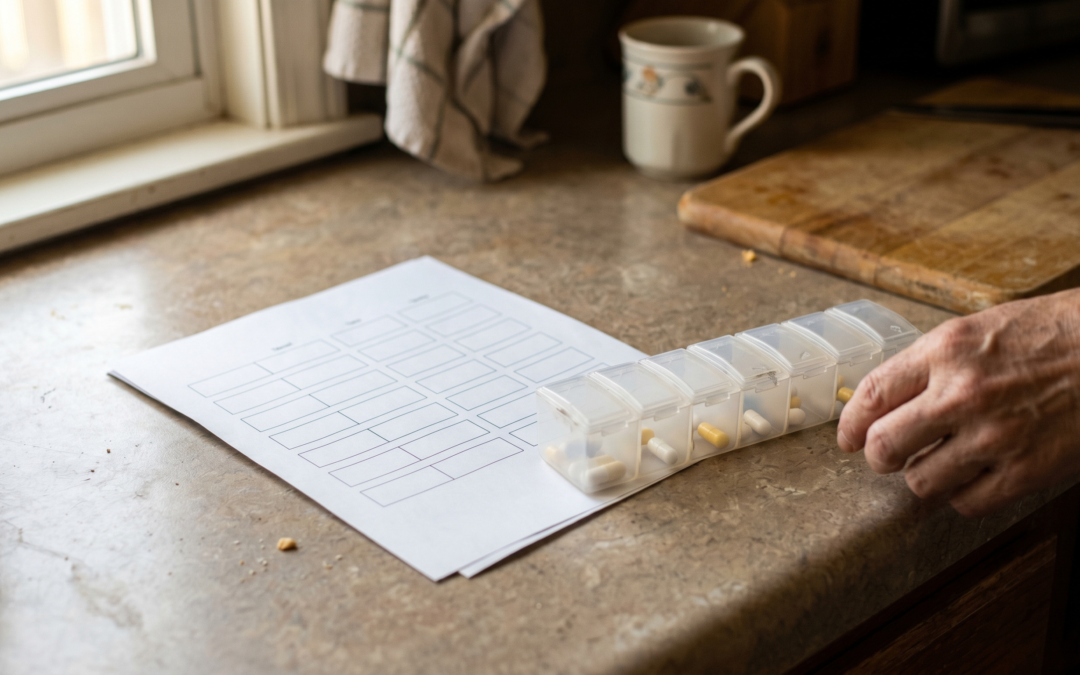
Every paramedic, every ER nurse, every doctor I’ve ever talked to says the same thing: the medication list is the document they wish every patient had.
Not the advance directive. Not the insurance card. The medication list.
Here’s why. When someone arrives in an emergency room unable to speak for themselves, the team needs to know what’s in their system. What medications. What doses. What they’re allergic to. Getting that information wrong, or not having it at all, can turn a manageable situation into a dangerous one very quickly.
Most people don’t have this list. Most people who are on six or eight medications have them stored in their head, or scattered across three pharmacy apps, or in a cabinet no one else knows to open.
This is one of the easiest things to fix. And it takes about twenty minutes.
What goes on the list
A good medication list has five things for each medication:
The name. Both the brand name and the generic name if you know it. ER teams use generic names. Pharmacists can help you fill this in.
The dose. The number on the bottle. Not what you actually take (though you can note that separately). What’s prescribed.
What it’s for. One line. “Blood pressure.” “Thyroid.” “Anxiety.” The medical team doesn’t need your full history. They need context.
The prescribing doctor. Name and phone number. This becomes important when teams need to verify something quickly.
How long you’ve been on it. Approximately is fine. “Two years” or “since 2019.” This helps the team understand your baseline.
Beyond medications, include:
- Allergies, including what happens when you have a reaction (rash, breathing difficulty, nausea)
- Over-the-counter supplements and vitamins you take regularly (these interact with medications more than people realize)
- Your primary care doctor’s name and number
- Your pharmacy name and number
- Your emergency contact
Where to keep it
The list is only useful if someone can find it.
Three copies. One on your person or in your wallet (a folded piece of paper works fine). One on the refrigerator. One with whoever would be called in an emergency.
The refrigerator sounds like an odd choice, but emergency responders are trained to look there. It’s a known location. If you use a standard medical information holder (they’re inexpensive, often called a “Vial of Life”), it goes on the refrigerator door.
A digital copy in your phone’s health app (iPhone Health or Android equivalents) is also useful. Emergency responders can sometimes access this from the lock screen.
The pharmacy shortcut
If you’re on multiple medications and the thought of writing everything down is overwhelming, your pharmacist is your best friend here.
Call your pharmacy and ask for a printout of all your current prescriptions on file. They can generate this in minutes. It won’t have everything, but it gives you a starting point you can fill in from there. Ask them to include generics if your list shows only brand names.
Your doctor’s office can also provide a current medication list from your chart. Many practices now have patient portals where you can download this directly.
The part people forget
I want to say something about supplements, because this is the piece that gets left off the most.
Fish oil, melatonin, turmeric, vitamin D, CoQ10, magnesium — these interact with prescription medications. Blood thinners and fish oil. Antidepressants and St. John’s Wort. Thyroid medication and calcium supplements (they should be taken hours apart).
A clinician cannot catch interactions they don’t know about. If you take supplements, they go on the list. All of them.
Keep it current
The list is only as good as the last time you updated it. A few simple habits:
When a new medication is prescribed, add it before you leave the doctor’s office.
When you stop a medication, cross it off.
Review the whole list once a year, ideally at your annual physical. Ask your doctor to verify it’s complete and current. This review has a side benefit: it often surfaces duplications or outdated medications that nobody caught.
This is one of the five
The medication list is one of the five documents I think every adult over 55 should have in place. The others cover legal preparedness, emergency contacts, financial access, and what to do if something happens to you.
If you want to know where you stand on all five, the Independence Assessment takes three minutes and gives you a clear picture of what you have and what’s missing.
Your medication list won’t prevent anything bad from happening. But it gives the people caring for you exactly what they need to help you.
Anne