
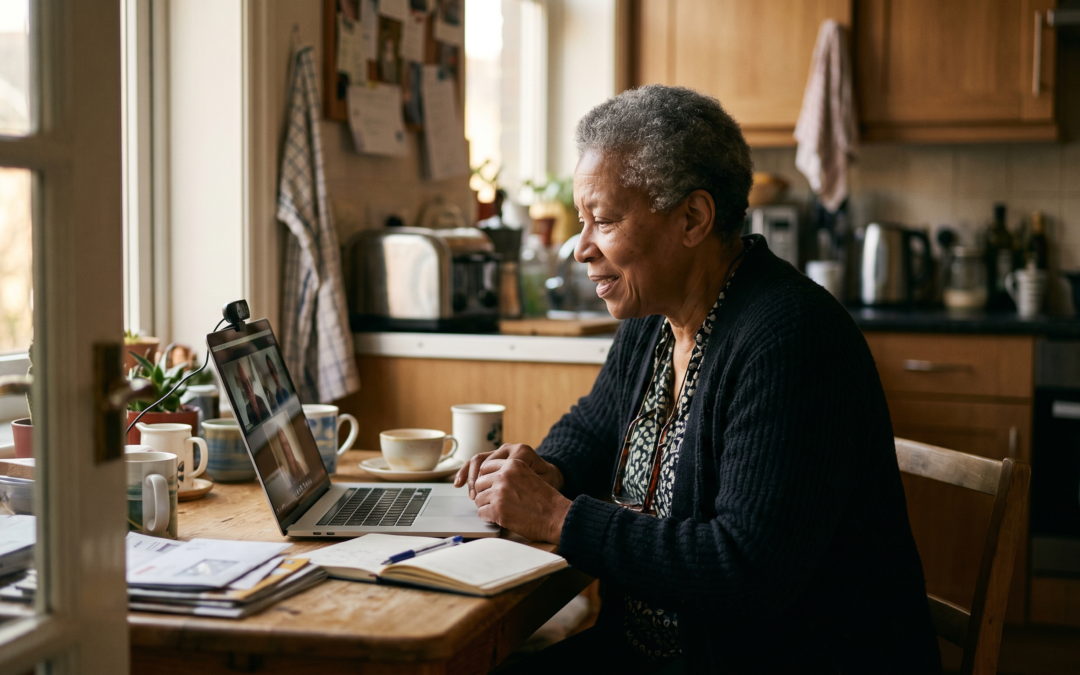
I’m a lifelong tech person. I spent my career in IT. I am not intimidated by new tools.
And I still went nearly two years without using telehealth for anything, even after it became widely available.
Not because I couldn’t figure it out. Because I hadn’t thought carefully about when it made sense. I had a doctor I liked. I knew how to get to her office. Why change that?
Then I started actually paying attention to what telehealth can and can’t do. And I realized I’d been leaving a genuinely useful tool on the table.
What telehealth actually is
Telehealth means seeing your doctor, nurse practitioner, or other healthcare provider via video or phone instead of going to their office. That’s it.
You’re not seeing a random doctor somewhere. In most cases, you’re connecting with your own provider or someone in their practice. The visit is documented in your medical record the same way an in-person visit is.
Since the pandemic, the range of what can be handled remotely has expanded significantly. And Medicare now covers most telehealth services, which removed one of the main barriers for people over 65. As always, coverage details change, so check with your specific plan.
What can actually be handled remotely
This is where a lot of people are surprised, because the list is longer than most assume.
Follow-up visits after an in-person appointment can almost always be done by video. Reviewing lab results, checking in on how a medication is going, discussing a test result, these don’t require you to sit in a waiting room for forty-five minutes.
Mental health appointments are handled remotely with particular effectiveness. Many therapists and psychiatrists now do the majority of their sessions by video.
Prescription refills and medication management conversations often don’t require an in-person visit.
Checking in on a new symptom that isn’t urgent, not a chest pain or breathing emergency, but something you want to have looked at, is frequently manageable remotely. Your provider can assess it, decide if you need to come in, and save you the trip if you don’t.
Annual check-ins with specialists, when the specialist is reviewing records and talking through a chronic condition rather than performing an exam, can often be done by video.
What requires in-person care: anything that needs a physical examination, lab work, imaging, procedures of any kind. Telehealth is a supplement, not a replacement.
Why more people over 60 aren’t using it
I’ve asked this question in a lot of conversations. The answers tend to fall into a few categories.
“I don’t know how it works.” This is the most common one, and the most fixable. Your doctor’s office can walk you through it. Most systems take about five minutes to set up.
“I’m not sure my insurance covers it.” Coverage expanded significantly with the pandemic and has stayed broad for most plans. Calling your insurance company to ask specifically about telehealth coverage takes one phone call.
“I prefer seeing my doctor in person.” This is a completely valid preference for your primary care visits. You don’t have to replace in-person care. You can use telehealth for the visits that don’t actually need you to be there, and keep your in-person appointments for the ones that do.
“I’m not comfortable with video calls.” If you can do a FaceTime with family, you can do a telehealth visit. If you can’t, most providers also offer phone-only options. The technology is flexible.
How to set up your first visit
Start by calling your primary care office and asking whether they offer telehealth appointments and how to set up an account. Most practices use one of a handful of platforms (Zoom for Healthcare, Epic MyChart, Teladoc, and others) and their staff can walk you through it.
Before your first visit:
Find a quiet, well-lit place to sit. Your kitchen table works fine.
Test the technology fifteen minutes before the appointment. The platform usually has a test feature. If something isn’t working, call the office. They’re used to this.
Have your medication list nearby, the same one you’d bring to an in-person visit.
Write down the two or three things you want to address, because telehealth visits run to time the same way in-person ones do.
That’s it. The first one is the hardest, and “hard” means “slightly unfamiliar.” After that it’s just a different kind of appointment.
The real value over time
The way I think about telehealth now is as a way to stay in closer contact with my healthcare without the friction of getting there.
When getting to a doctor’s office requires planning, arranging a ride, taking time out of a day, people delay things they shouldn’t delay. A question that could be answered in a fifteen-minute video call becomes a thing they just live with. A medication that needs adjusting goes unadjusted.
Telehealth removes some of that friction. And for people who have difficulty with transportation, who live in rural areas, or who manage multiple chronic conditions and have frequent follow-up needs, it removes a significant amount.
The tool is there. It works. It’s covered by most insurance including Medicare. The main thing standing between most people and using it is just familiarity.
If you want to understand where technology fits into your overall independence plan, including what tools are genuinely worth exploring and what’s just noise, the 3-minute assessment gives you a clear picture across all five pillars.
I was late to this one. You don’t have to be.
Anne