
Someone asked me once why I spend so much time on this. Isn’t it depressing? Doesn’t it just make you think about getting old?
I said no. Not planning is depressing. Planning is what gives you your life back.
I want to talk about that. Because I think the reason most of us don’t do any of this is that we’ve been sold a story about what planning is, and the story is wrong.
This is the article that tells you the other story.
What “not planning” actually costs
When you don’t plan, you don’t avoid the future. You just hand it to someone else with no map.
I’ve been in the room when that happened to a family. I was the family. The hospital social worker was asking my daughter and me questions we couldn’t answer, about a man my daughter had known her whole life and I had been married to for thirty-seven years. We were guessing. About him. About what he’d want. About whether he’d ever done the paperwork that would have told us.
It’s hard to describe what that feels like in the moment, except that it feels like betraying the person you love most by not knowing the thing they would have told you, if anyone had asked.
The thing nobody tells you about not planning is that it doesn’t protect you from the future. It just makes the future fall on the people you love.
How planning is actually a gift to your family
I’ve thought about this a lot since.
When my husband came home, I started doing the work I should have done years before. Wills. Directives. The folder. The list of who to call. The conversation with my daughter about what we’d want if it ever happened again.
Some of those conversations were hard. Most of them were not. The hardest part was starting them, not having them.
Here’s what I noticed on the other side. My daughter wasn’t sad after we talked. She was relieved. She said, more than once, some version of “I’m glad I know now.”
What I’d been protecting her from, all those years of not having the conversation, wasn’t sadness. It was the eventual scramble. And the scramble would have been so much worse than the conversation.
That’s the gift. Not the documents. The not-having-to-scramble.
How planning is also a gift to yourself
This is the part nobody talks about, and it’s the part that surprised me most.
I thought planning would feel heavy. Like I was making my world smaller by acknowledging that it would end. What it actually felt like, once I started, was a weight coming off.
I didn’t realize how much mental space I had been giving to the thing I was avoiding. “I should really get to that.” “We need to update the will.” “I should talk to my brother about Mom’s finances.” Those thoughts were running in the background of my life for years, like a tab open in a browser that I never closed. Every time I sat down to enjoy something, there it was. Reminding me.
The peace that came from actually doing some of it was not what I expected. It was bigger than the work. I had been afraid of feeling sad, and what I felt instead was light.
You don’t have to take my word for it. Most people I know who’ve started this work say some version of the same thing. The hardest part is the part before you start.
What planning is not
I want to clear up a few things, because the word “planning” makes people imagine the wrong picture.
Planning is not a one-time event. You don’t sit in a lawyer’s office for four hours and “have a plan.” You start. You add to it. You revise. It’s a living thing.
Planning is not a contract with your future. The documents you put in your folder this year can be updated next year, and the year after that. You’re not locked in. You’re laying down a record of what you’d want if today were the last day you could say so.
Planning is not the same as deciding everything. It’s deciding the most important things and leaving room for the rest. The people who have to act on your behalf will be making their own decisions too. You’re just giving them better tools.
And planning is not depressing. I’ll say it one more time. Not planning is depressing. Planning is the opposite. It’s what lets you stop carrying the not-doing.
The simplest first step, this week
If you’ve read this far, I want to ask you to do one thing. Not all of it. Just one thing.
Pick a conversation you’ve been avoiding and have it.
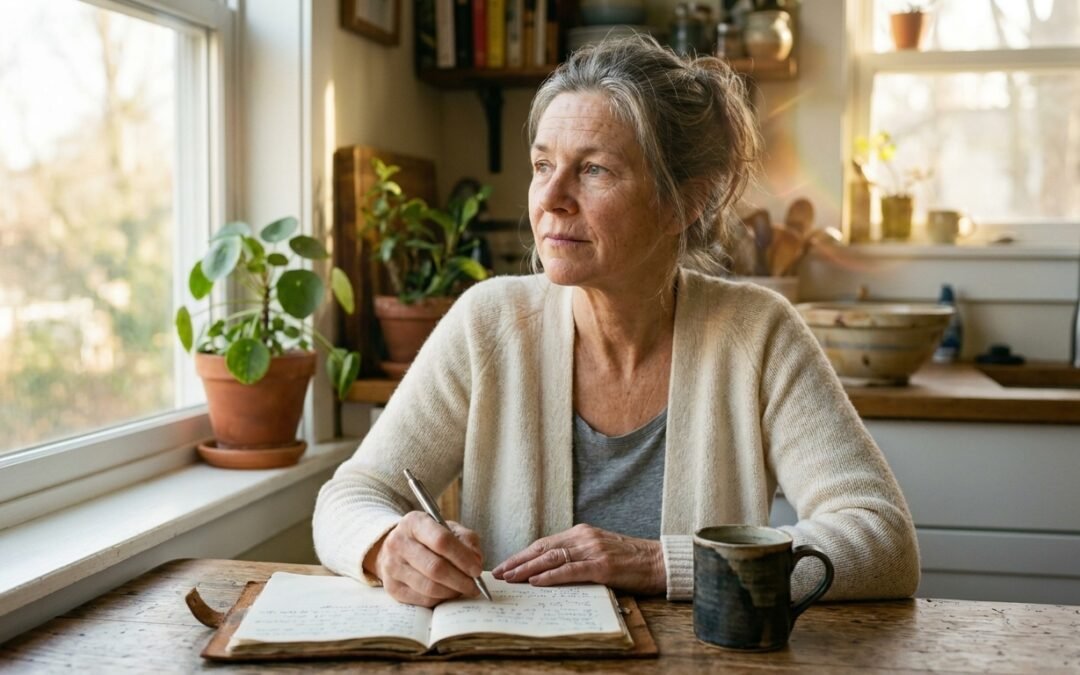
Maybe it’s with your spouse about what each of you would want. Maybe it’s with a sibling about your parents. Maybe it’s with yourself, sitting at a table with a piece of paper, writing down five things you’d want someone to know if you couldn’t say them yourself.
It doesn’t have to be perfect. It doesn’t have to be complete. You don’t need a lawyer for any of it.
You just need to start.
If you’d like a way to know where to start, the Independence Assessment will point you to a specific pillar to focus on first. Three minutes. Twenty questions. A personalized starting place for the part of life that needs your attention right now.
One more thing
If this article made you think of someone, send it to them. The hardest part of starting is feeling like you’re the only one thinking about it. You’re not.
I’m glad you’re here.
Anne